
We’ll help you perfect that protein shake consistency with the right speed progression. Start low (1-3) for 15 seconds to hydrate powder, then medium (4-6) for 30 seconds to crush clumps, finishing high (7-10) for 15-20 seconds to achieve silky smoothness. For whey protein, blend at high speeds for 30-60 seconds; casein needs gentler treatment at medium speeds for 90 seconds. This three-step approach reveals cafe-quality shakes – but there’s more to mastering the perfect blend.
Some of the links in this article may be affiliate links. If you make a purchase through these links, we may earn a small commission at no extra cost to you. Thank you.

Understanding Your Blender’s Speed Range
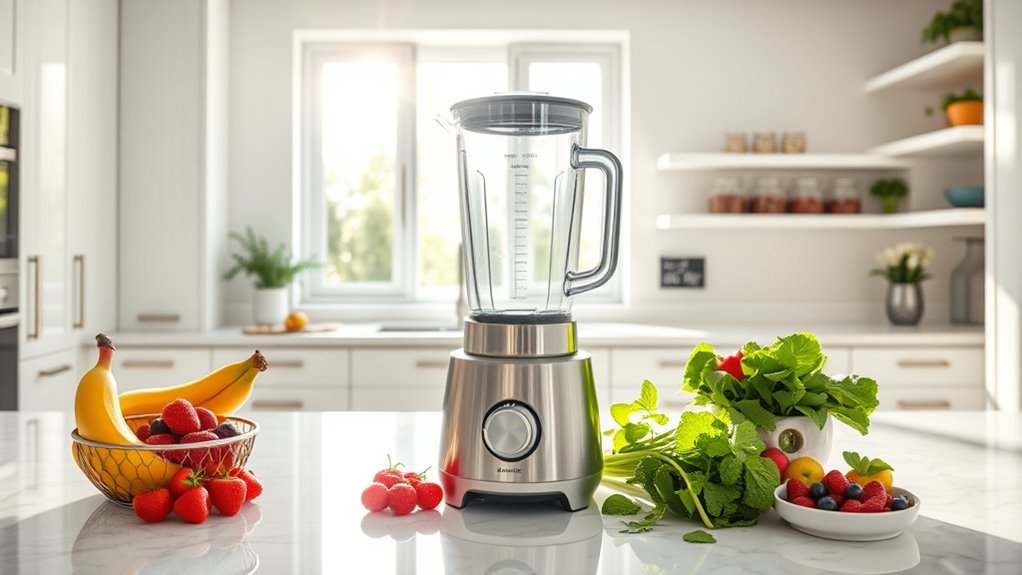
Three critical speed ranges define your blender’s protein shake capabilities – and we’re going to master them all.
Your blender’s low speeds (1-3) gently combine ingredients without destroying their integrity. Think of it as the gentle introduction phase of your shake creation.
When you’re ready to tackle those stubborn protein powder clumps, kick it up to medium speed (4-6). This is where the real transformation happens. Your shake starts developing that smooth consistency we’re after.
Need to demolish ice or tough ingredients? That’s what high speeds (7-10) are for.
And don’t forget the pulse feature – it’s your secret weapon for breaking up resistant chunks without over-processing the entire shake.
Using a high-performance blender can significantly enhance your blending experience by ensuring even tougher ingredients are smoothly incorporated into your shake.
Master these speed settings, and you’ll nail the perfect protein shake texture every time.
Starting With Low-Speed Fundamentals
While your instinct might be to blast that protein shake at full power, mastering the low-speed fundamentals will revolutionize your results.
We’re talking game-changing consistency for your high-quality protein drinks, and it starts with patience.
Let’s get tactical: Start your protein powders on low for 15-30 seconds. This isn’t just arbitrary – it’s science. The gradual approach allows proper hydration and prevents those annoying dry clumps that ruin your shake.
Add ice? Same rule applies. Keep it low and let those cubes work their magic on breaking up any stubborn powder pockets.
Once you’ve nailed the initial mix, we’ll gradually climb to higher speeds for another 30-60 seconds. Trust us – this method delivers the smooth, perfectly blended protein shake you’re after. Additionally, using a high-performance blender enhances your blending experience, as it features variable speed settings that allow for precise control over your shake’s consistency.
Mid-Speed Mixing Techniques
After you’ve mastered the low-speed foundation, it’s time to kick things up a notch. Mid-speed mixing is your secret weapon for perfect protein shake consistency.
We’re talking settings 4-6 on your blender – the sweet spot for breaking down those stubborn clumps without turning your shake into a foam party.
Here’s the game plan: Add ice cubes for texture, then hit that mid-speed for 15-30 seconds.
Using a shaker bottle? Give it a firm side-to-side motion – none of that wild overhead shaking nonsense.
You’ll know you’ve nailed it when your protein shake has that silky-smooth mouthfeel without excessive aeration.
Trust us, this technique strikes the perfect balance between thorough mixing and maintaining drinkability. It’s science meets efficiency, and your taste buds will thank you.
High-Speed Blending Secrets
Let’s put that mid-speed knowledge into overdrive. High-speed blenders are your secret weapon for achieving that perfect protein shake consistency.
We’ll show you why they’re essential and how to use them like a pro.
Start with proper layering – liquids at the bottom, protein powder on top. It’s not just OCD; it’s science.
Begin blending at low speed to combine ingredients, then crank it up. We’re talking maximum power for minimum time – under 60 seconds for silky smoothness.
Don’t forget the ice trick. It’s not just for temperature control; it’s your texture enhancer.
Drop it in while blending at high speed to demolish any remaining clumps and create that creamy, restaurant-quality blend consistency you’re after.
Trust us, your taste buds will thank you.
Pulse Function Benefits for Protein Shakes
Understanding your blender’s pulse function is the game-changer you’ve been missing.
Let’s be clear: those clumpy protein shakes aren’t doing anyone any favors. We’re about to fix that.
The pulse function delivers short, controlled bursts that break up stubborn ingredients without turning your shake into soup.
We’ve found it’s particularly effective for even distribution of protein powder and incorporating those notoriously difficult add-ins like nut butter. Plus, you’ll maintain that perfect, thick consistency that makes shakes satisfying.
Want the pro move? Use quick pulses when adding ice or frozen fruit.
You’ll get a colder, creamier result that’ll make your taste buds thank you. It’s simple physics – intermittent blending equals better texture control.
Speed Progression Timeline
When it comes to crafting the perfect protein shake, timing is everything – and we’re talking seconds, not minutes. Let’s break down the exact speed progression timeline that’ll guarantee ideal consistency.
| Speed Setting | Duration | Purpose |
|---|---|---|
| Low (1-2) | 10-15s | Initial mixing |
| Medium (3-5) | 20-30s | Break down clumps |
| High (6-10) | 15-20s | Aerate and smooth |
Start at low speed settings to prevent splatter, then pause briefly before ramping up to medium. This crushes any stubborn clumps. For frozen ingredients, extend the high-speed blend to 30-45 seconds. Remember: consistency is key – both in your speed progression and your final product. We’re not just mixing; we’re engineering the perfect texture through precise, timed changes.
Custom Speed Settings for Different Proteins
Now that you’ve mastered the speed progression timeline, it’s time to get protein-specific. Different protein supplements demand unique blending approaches for ideal results.
Let’s break it down: Whey protein thrives at high speeds (20,000 RPM) for 30-60 seconds – perfect for that smooth shake you’re after.
Casein’s thicker nature needs a gentler touch at 10,000 RPM for up to 90 seconds.
Plant-based warriors, your pea and rice proteins need the middle ground – 15,000 RPM for about a minute.
Adding extras? Start low, then crank it up. The blending time sweet spot depends on your thickness preference.
Want it creamier? Push it to two minutes, especially with frozen add-ins.
Trust us – these settings aren’t random. They’re your blueprint for consistently perfect shakes.
Frequently Asked Questions
Can Hot Liquids Be Used When Blending Protein Shakes?
We don’t recommend using hot liquids in protein shakes, as high temperatures can affect protein quality. Keep your blending temperature effects minimal by using cool or room-temperature liquids for best safety and results.
How Long Can I Store My Blended Protein Shake?
While we’d love to blend and store for days, we recommend consuming protein shakes within 2 hours. Even in sealed storage containers at ideal temperature, shake separation occurs beyond this timeframe.
Should I Add Ice Before or After Other Ingredients?
We recommend adding ice last after other ingredients for ideal blending texture. When layering ingredients, placing ice on top helps control consistency and prevents protein powder from sticking to blender walls.
Will Blending at High Speeds Destroy Protein Powder’s Nutritional Value?
We’re happy to report that blending won’t cause protein powder degradation. While blending temperature effects are minimal, nutrient absorption factors remain stable even at high speeds in your shake.
Can I Pre-Mix Protein Powder With Liquid Before Blending?
We recommend pre-mixing protein powder with liquid before blending. Start with a 1:2 powder-to-liquid ratio, stir well to prevent clumps, then blend for best results. This pre-mixing technique guarantees smoother shakes.