
Can a Vitamix replace a food processor? In practice, not entirely—and that reality matters for savvy cooks. Many people invest in a Vitamix expecting it to cover every prep task, only to discover it can’t slice vegetables or knead dough like a dedicated food processor can. Both appliances bring real value to the kitchen, but they excel in different areas. The key is to choose based on how you actually cook: what tasks you ritualize, how often you blend versus chop, and which textures you rely on for your recipes. In short, a Vitamix is spectacular for smoothies, soups, sauces, and emulsions; a food processor shines for shredding, slicing, kneading dough, and tasks requiring straightforward, uniform chops. To optimize your setup—and your budget—align your purchase with your most frequent cooking workflows, and remember that many home kitchens benefit from having both tools for complementary capabilities.
Should You Buy a Vitamix or Food Processor First?
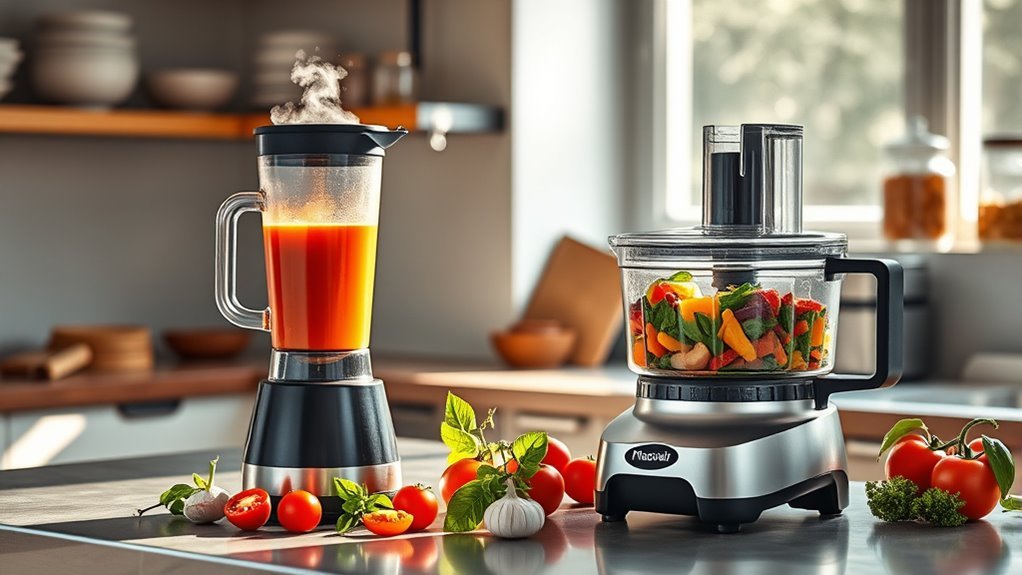
When you’re just starting to build out your kitchen, choosing between a Vitamix and a food processor first is actually a harder call than it sounds. Both handle different cost points and come with real budget tradeoffs.

The Vitamix wins for smoothies, nut butters, and hot soups — it’s genuinely impressive. But it can’t slice or shred vegetables, and that’s a gap you’ll feel constantly.
The food processor, well, it handles the everyday prep that saves you the most time. If we’re being honest, most people probably cook more than they blend. I think that tips the scale toward the food processor as your first buy, with something like a Magic Bullet filling the blending gap on the cheap. For those seeking long-term versatility, a high-performance blender can be a worthwhile addition later, offering smoother textures and the ability to make nut butters and soups efficiently while standing up to tougher ingredients high-performance blenders.
What a Vitamix Does Better Than Any Food Processor
When it comes to silky-smooth blending, no food processor can really compete — a Vitamix pulverizes frozen fruit, nuts, and fibrous vegetables into textures that are genuinely velvety, not just “mostly smooth.” It can also heat soups directly through friction while blending, which, honestly, still feels a little like magic every time we do it. And cleanup? Well, it’s basically a self-cleaning machine — just add soap and water, run it for a minute, and you’re done. Variable speed settings give you precise control over texture and consistency, making the Vitamix a versatile choice beyond basic chopping.
Smooth Blending Without Pulp
How often do you bite into a smoothie — well, drink one — only to get a mouthful of stringy pulp or half-blended seeds? It’s honestly the worst. The Vitamix eliminates that problem through sheer blending power. Here’s what it handles better than any food processor:
- Frozen fruit blends into velvety, creamy textures almost instantly
- Nut butter achieves ultra-smooth consistency without extra processing steps
- Soups heat directly through blending, removing pulp-heavy chunks
- Seeds and fibrous greens break down completely — no gritty surprises
Nutrient retention stays high because nothing gets left behind. Maybe that sounds like marketing talk, but in my experience, the difference is actually noticeable. Clean-up’s simple too, which keeps results consistently pulp-free every time.
Heating Soups While Blending
But smooth blending‘s only part of what makes the Vitamix genuinely impressive. It can actually heat soups while blending — no stove required. That’s something a food processor simply can’t do.
Here’s how it works: the motor spins so fast that thermal friction builds up inside the container, gradually warming your ingredients as they blend. We’re talking raw vegetables and stock transforming into a hot, velvety soup in minutes. It’s almost like the blender becomes its own little kitchen appliance — well, several appliances rolled into one.
Food processors chop, slice, and grind beautifully, but hot blending? That’s completely outside their wheelhouse. If you’re someone who makes soups regularly, this single feature alone probably justifies choosing a Vitamix over a food processor.
Effortless Self-Cleaning Design
Cleaning a food processor is honestly one of those tasks that feels way more tedious than it should — blades to carefully hand wash, multiple parts to disassemble, and residue that stubbornly clings to every crevice. The Vitamix? Totally different story. The self cleaning benefits are real and genuinely save time.
Here’s how it works:
- Add warm water to the jar
- Drop in a little dish soap
- Run the machine for 30–60 seconds
- Rinse and done
No disassembly. No scrubbing. We also love that jar flavors don’t linger — though using separate jars for strong ingredients like garlic probably helps avoid any cross-contamination. It’s a small but meaningful advantage that actually changes how often you’ll want to use it.
What a Food Processor Does That a Vitamix Simply Can’t
Slice a cucumber paper-thin or shred a block of parmesan into fluffy ribbons — that’s where a food processor leaves the Vitamix in the dust. The Vitamix simply has slicing limitations that no attachment or setting can fix. It’s just not built for that kind of precision work.
A food processor’s shredding capabilities, though? Genuinely impressive. We’re talking fluffy cheese, shredded carrots, even finely grated breadcrumbs — all done fast. And then there’s dough, crackers, chopped nuts.
Actually, the Cuisinart 14-cup handles all of that with controllable, repeatable results. You know, some tasks need a blade moving horizontally, not spinning blades pulverizing everything. Both machines are complementary, honestly. But if precise prep work matters to you, the food processor wins — no contest.
Can a Vitamix Replace a Food Processor?
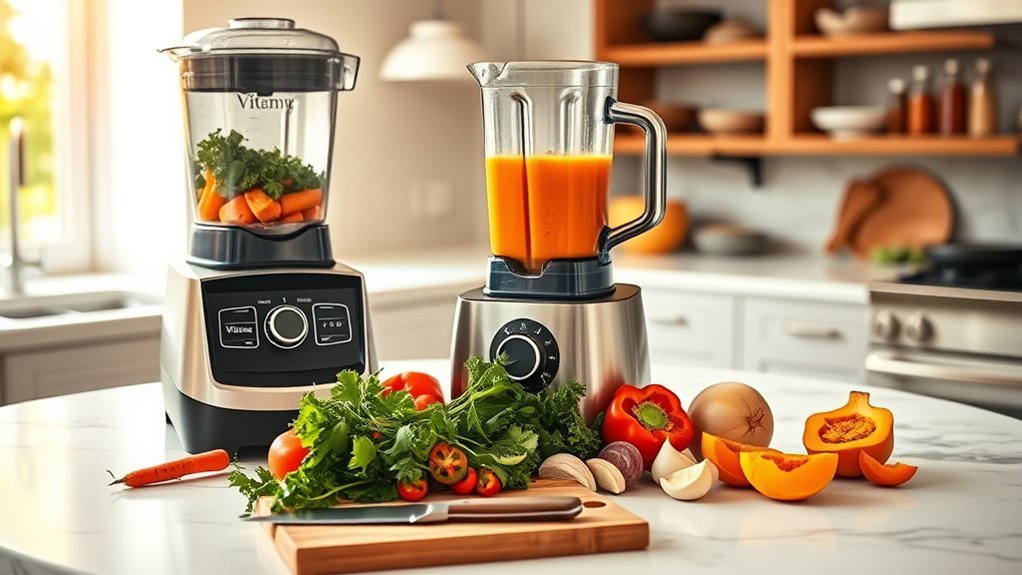
The short answer is no — not entirely, anyway. A Vitamix is incredible for blending, but it’s not a two-word fix for everything a food processor handles. Here’s an honest breakdown of the discussion ideas worth considering:
- Smoothies and nut butters — Vitamix wins, no contest.
- Creamy sauces and soups — Again, Vitamix handles these beautifully.
- Slicing and shredding vegetables — A food processor’s attachments do this; a Vitamix simply can’t.
- Precise dry ingredient prep — Food processors manage this more efficiently.
Well, think of it like using a hammer as a screwdriver — maybe possible sometimes, but not ideal. We’re not saying one’s better overall. Use each tool for what it actually does best.
Smoothies and Slicing: The Core Strengths Compared
Now that we’ve established where each appliance falls short, let’s get into what they actually do well — because that’s where things get interesting. The Vitamix is genuinely unbeatable for smoothies. We’re talking silky, smooth texture with almost no pulp, plus the ability to heat soups or blend nut butters without switching containers. It’s kind of like having a personal chef trapped in a jar.
The food processor, though, is where precise slicing and shredding actually shine. Attachments make quick work of vegetables, doughs, and crackers — tasks a blender honestly struggles with. In my experience, people underestimate how much time precise slicing saves during meal prep. So, well, it really comes down to what you’re cooking most often.
If You Can Only Keep One, Choose This
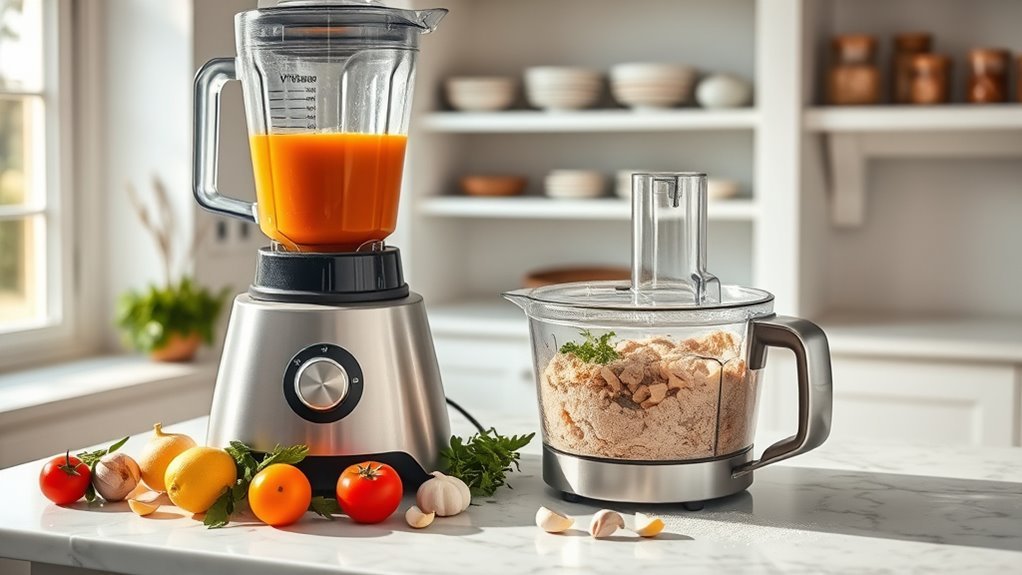
Here’s where we’ve to get real — if you can only keep one, we’d go with the Cuisinart food processor, and honestly, it’s not a close call. The Vitamix is brilliant, but it can’t slice or shred. That matters more than people think.
Here’s why we’d keep the food processor:
- Broader prep tasks — slicing, shredding, chopping, dough
- Attachments that a Vitamix simply can’t replicate
- Budget conscious shoppers can grab a used appliance in great condition for less
- A secondary blender — like a Magic Bullet — handles smoothies affordably
Maybe you’re a smoothie-first person, and that’s fair. But for most households, the food processor wins. Evaluate your lifestyle honestly before deciding.
When Your Cooking Volume Justifies Owning Both
But at what point does it actually make sense to own both? Well, the two word discussion ideas we keep hearing are budgeting practicality — and honestly, that’s the right framing. If you’re cooking in large volumes regularly, the math starts to work out. Think of it like a professional kitchen: specialists outperform generalists when demand is high.
The Vitamix handles your smoothies, nut butters, and hot soups. The food processor speeds through doughs, slicing, and energy bars. Neither replaces the other completely, and that’s kind of the whole point.
I think if you’re meal prepping weekly, batch cooking sauces, or — wait, let me rephrase — if you’re consistently hitting the limits of one appliance, you’ve probably already justified owning both.
How to Save Money on a Vitamix or Food Processor
Once you’ve decided both appliances make sense for your kitchen, the next question is pretty obvious — how do you avoid overpaying?
Here are four budget tips we actually swear by:
- Buy refurbished Vitamix models — you’ll get a five-year warranty and jar choices starting around $260 versus $500+ new.
- Watch for sales and coupon promotions — 10–30% off by order total adds up fast.
- Bundle purchases together when possible; retailers sometimes knock prices down markedly.
- Prioritize jar compatibility over flashy features — the right jar size matters more than extra settings you’ll probably never use.
Warranty options matter too, especially with refurbished units. Honestly, a solid warranty makes buying refurbished feel way less risky than it sounds.
Frequently Asked Questions
Is a Vitamix Better Than a Food Processor?
Neither’s universally better — it’s blender vs processor based on your needs. We’d say price vs performance matters: Vitamix excels at smoothies and soups, while a food processor wins for slicing, shredding, and prep tasks.
What Can a Food Processor Do That a Vitamix Can’t?
A food processor excels at batch chopping hard vegetables, dough kneading, slicing, and shredding—tasks a Vitamix can’t replicate. We’d recommend it for pie crusts, breadcrumbs, and energy bars when precision matters most.
What Is the Most Highly Rated Food Processor?
We’d recommend the Cuisinart 14-cup food processor for a quick comparison of top models—it’s a leader in brand reliability, offering excellent performance for chopping, slicing, and shredding at a great value.
What Are Common Vitamix Problems?
We’ve found common problems with Vitamix include jar odors, compatibility issues, and reliability concerns. Our troubleshooting tips? Try separate jars, easy soap-and-water cleaning cycles, and consider extended warranties for refurbished units.