
Which Blender Is Actually Best? The Honest Answer
Some of the links in this article may be affiliate links. If you make a purchase through these links, we may earn a small commission at no extra cost to you. Thank you.

We’ve all stood in the blender aisle, overwhelmed by watts, presets, and flashy promises. The truth is, most of that noise matters far less than you think. What separates a great blender from a merely decent one comes down to a small set of real factors—likely three or four—that aren’t always the ones shoppers expect. In this guide, we cut through the hype with practical, evidence-based insights you can trust.
Power, Blades, and Capacity: What Best Blender Claims Actually Mean
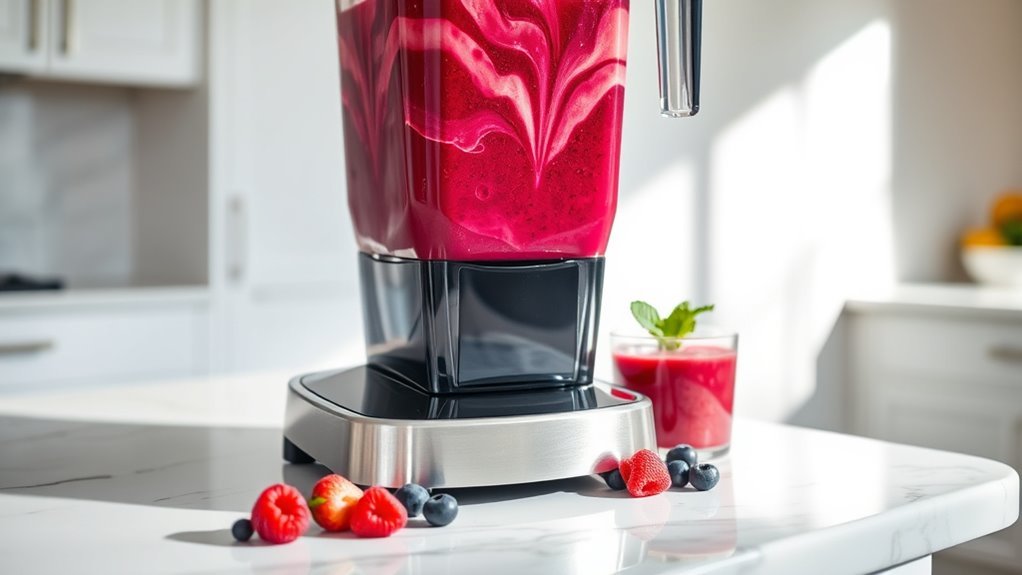
When we’re shopping for a blender, it’s tempting to assume that higher wattage means better performance — and honestly, that’s not entirely wrong. A 1,000-watt motor handles tough ingredients better than a weak one.
But here’s the thing: power alone doesn’t guarantee great results. Blade design matters just as much, maybe more. Dull, simple four-blade setups actually resist clogging better than complex ones — which, I know, sounds counterintuitive.
And jar geometry? That’s probably the most underrated factor. A tapered jar creates stronger vortexes, pulling ingredients toward the blades more efficiently. A wide jar is easier to clean, sure, but it can reduce blending performance.
The Performance Tests That Reveal a Blender’s True Ability
Knowing what to look for in a blender’s design is one thing — actually putting machines through their paces is another. We ran blenders through ice crushing, smoothies, pesto, soup, and emulsification tasks, including raw almonds with oat milk and kale with water. We strained results to check pulp and residue. Noise considerations mattered too — we tracked motor sound and odor during intensive use, plus a 6-minute soup cycle to test heating efficiency. Durability implications became clearer over weeks and months, inspecting blades, pitchers, and cups for wear. Cleaning got tested with warm soapy water and dishwasher checks. What actually surprised us? Simple, blunt blades paired with tapered jars consistently outperformed complicated multi-tier blade designs. Better emulsification, smoother textures — it’s honestly that straightforward. Additionally, longevity and warranty value emerged as practical indicators of true performance and investment-worthiness durability and warranty.
Which Blender Wins for Smoothies, Soups, and Frozen Drinks?
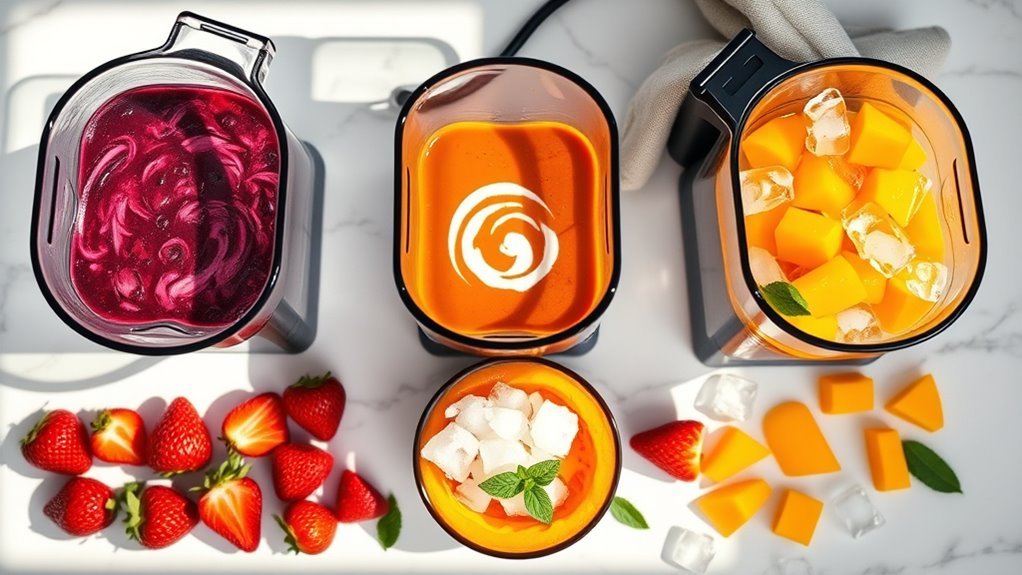
After weeks of blending everything from frozen margaritas to silky bisques, we’ve got a pretty clear picture of what actually wins. The Vitamix 5200 is, honestly, hard to beat. Its tapered jar and vortex design produce textures that feel almost professionally made — velvety soups, smooth smoothies, consistent frozen drinks every time. Don’t fall too deep into the preset hype, though. The Vitamix Propel 510’s presets are convenient, sure, but they don’t dramatically outperform manual control. And if you’re working with a tighter wallet, the Oster budget blender handles almonds and kale surprisingly well, though the texture isn’t quite as refined. Maybe that trade-off works for you. For most people, we think the 5200 remains the clearest answer. High-performance capabilities and durability often make the investment worthwhile, especially since many models offer longer warranties and larger jar capacities that support frequent use.
Best Blenders by Budget: From $50 to $500
How much should you actually spend on a blender? Well, it depends on what you need. We’ve tested options across every price point, and here’s what we found:
- ~$50: Budget picks like the Oster 3-Speed Chrome deliver solid performance with durable glass pitchers.
- ~$100–$157: The Hamilton Beach Power Elite wins best value — simple, dishwasher-safe, reliable.
- ~$157–$200: The Breville Fresh & Furious steps up with more power without breaking the bank.
- $400–$500: Mid range values peak here with Vitamix models offering longer warranties and stronger motors.
I think most people probably don’t need to spend $400. Honestly, a $100–$200 blender handles most tasks beautifully. But if you blend daily, investing more makes sense.
Blender Features That Rarely Justify the Price
We’ve all been tempted by blenders loaded with preset modes and flashy vacuum technology, but honestly, a lot of these features don’t pull their weight. Presets, for instance, sound great on paper — and maybe they’re for some people — but in our experience, they’re often underpowered or inconsistent, like a shortcut that actually takes longer.
Vacuum blending, well, it’s a similar story: the added complexity brings overheating risks and cleaning headaches that most of us just don’t need.
Overhyped Preset Modes
When you’re staring down a blender with twelve preset modes, it’s tempting to think more options means better results — but that’s rarely how it plays out. Overhyped presets distract from what actually matters. Here’s what we’ve found:
- More presets don’t fix weak blades or a poorly designed jar.
- The Vitamix Propel 510 proves three solid presets outperform twelve mediocre ones.
- Vacuum drawbacks include added cost without consistent texture improvements.
- Oster’s ten-blade system — fancy on paper — actually traps food and complicates cleaning.
Well, it’s kind of like buying a car for its cup holders. The core performance is what you should care about. Robust power and smart jar geometry will always beat flashy preset variety.
Vacuum Technology Drawbacks
Preset bloat isn’t the only way blender brands pad their value proposition — vacuum technology is another area where the hype rarely holds up. Models like the Tribest Backspin promise reduced oxidation, but the vacuum drawbacks add up fast. Awkward pouring, non-dishwasher-safe parts, overheating — it’s a lot to deal with.
| Vacuum Tech Claim | Reality |
|---|---|
| Reduces oxidation | Marginal improvement only |
| Better emulsification limits | Minimal vs. high-end non-vacuum |
| Handles dense ingredients | Struggles with almond butter |
| Easy cleaning | Complex, hand-wash parts |
| Worth the premium price | Rarely justified |
We think the emulsification limits alone should give you pause. Maybe it works for niche tasks, but probably not for everyday blending. You’re essentially paying luxury prices for modest, task-specific gains.
How to Choose the Best Blender Without Overspending
How do you pick a blender that actually does the job without burning a hole in your wallet? We think it comes down to four smart priorities:
- Power first – Aim for 1,000+ watts and blade reliability matters; a blunt four-blade design handles tough ingredients consistently.
- Jar shape – Tapered jars improve emulsification and, well, they’re just easier to clean.
- Warranty longevity – A 5–10 year warranty probably signals better long-term value than flashy features ever will.
- Right-sized capacity – A 48–64 oz jar handles most batches without the oversized base inflating your cost.
Maybe skip models with non-removable blades — cleaning those is, honestly, a nightmare. More presets don’t guarantee better results either. Keep it simple.
Frequently Asked Questions
How Long Does a Typical Blender Last Before Needing Replacement?
Like a faithful horse aging past its prime, we’d say blender longevity typically spans 5–10 years. You’ll weigh repair vs replacement, warranty service, customer support, refurbishments worth it, and exciting new models before disposal and recycling your replacement timing decision.
Are Refurbished Blenders Worth Buying Compared to New Models?
Refurbished blenders can offer great refurbished value if you’re buying from a reputable seller. We’d recommend checking repair viability first—ensure parts are still available, so you’re not stuck with an unrepairable machine down the road.
Can Blenders Be Repaired, or Should Broken Ones Be Replaced?
Yes, blenders can often be repaired! We’d encourage you to weigh repair costs against replacement ethics—fixing a broken blender reduces waste. Simple fixes like blade replacements are affordable, making repair worthwhile before we consider buying new.
Which Blender Brands Have the Best Customer Service and Warranties?
Vitamix and Blendtec lead in brand warranties and customer service quality, offering 7-10 year coverage. We’d also recommend Ninja and KitchenAid for their responsive, reliable support programs.
How Do I Safely Dispose of or Recycle an Old Blender?
We recommend exploring recycling options at local e-waste centers before tossing your old blender. Consider repair vs replace first—if it’s fixable, fix it! For safe disposal, check retailer take-back programs like Best Buy’s recycling initiative.