
Can the Ninja Hot & Cold Blender Replace Your Stovetop? A Trusted, Evidence-Based Look
Some of the links in this article may be affiliate links. If you make a purchase through these links, we may earn a small commission at no extra cost to you. Thank you.

The Ninja Hot & Cold Blender is making bold claims in the kitchen gear landscape: it heats, blends, and even brews—all without a stove in sight. That sounds incredibly convenient, especially for busy households or small spaces. But there’s an important tension to explore: what this appliance can reliably do versus what a traditional stovetop handles with ease. In this analysis, we’ll evaluate the Ninja blender’s strengths and its limitations, grounded in practical use, expert guidance, and real-world performance.
What the Ninja Hot & Cold Blender does well
- All-in-one versatility: heating, blending, and brewing in one unit can streamline meal prep and reduce cookware clutter.
- Consistent heating for soups and smoothies: built-in heating can produce smooth, evenly warmed results when following tested recipes.
- Convenience and speed: pre-programmed cycles and automatic temperature control save time and minimize guesswork.
- Space efficiency: a compact alternative to multiple standalone appliances, ideal for apartments or small kitchens.
- Clean design and user experience: intuitive controls and dishwasher-safe parts enhance everyday usability.
Where it may fall short compared with a traditional stovetop
- Heat and texture control: a stove offers granular control over heat levels, simmering, deglazing, and reduction—nuances that can matter for certain sauces, pan-fried finishes, and delicate emulsions.
- Flavor development: browning and fond-building on a stovetop contribute depth that a blender-based system may not replicate exactly.
- Large-batch handling: capacity and consistent performance with very large pots or heavy quantities can differ from a conventional range.
- Ingredient versatility: some recipes assume cookware with direct contact and specific pan dynamics that a blender may not emulate.
- Repairability and customization: stovetops provide a broad ecosystem of compatible tools and techniques; the blender is a closed system with fixed parameters.
Bottom line
For everyday soups, smoothies, sauces, and hot beverages, the Ninja Hot & Cold Blender can be a strong, space-saving substitute that adds speed and convenience. However, for tasks that rely on precise heat management, fond development, or extensive batch cooking, a traditional stovetop still offers advantages. If you value a compact, all-in-one appliance and are willing to adapt certain techniques, the Ninja blender can complement your kitchen rather than wholly replace your stove. For best results, pair it with a few stove-top basics to cover any recipe that benefits from traditional sautéing, reduction, or browning.
How the Ninja Hot & Cold Blender Heats Food and Liquid
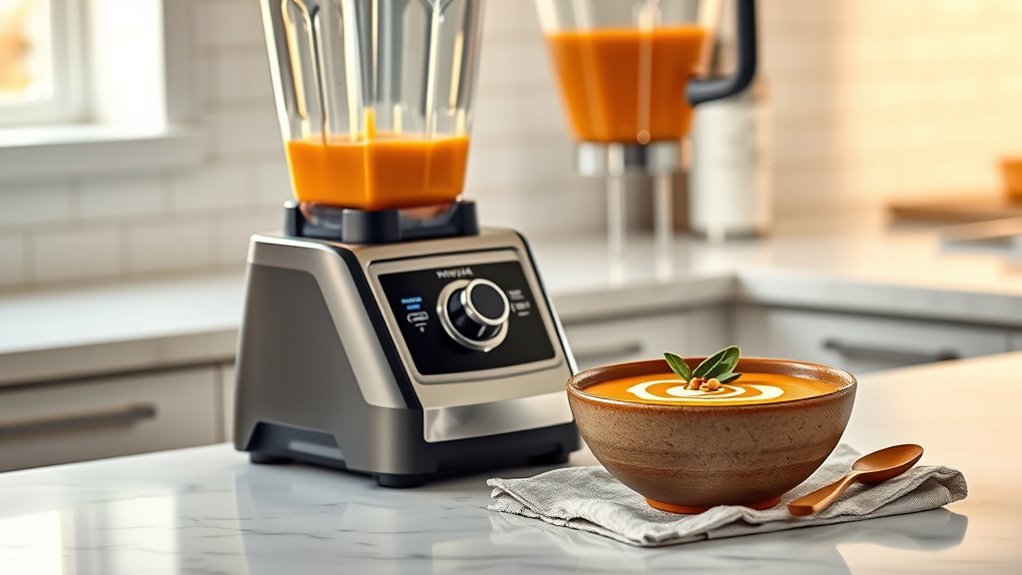
So how exactly does the Ninja Hot & Cold Blender heat your food? Well, it’s got a built-in heating element that warms ingredients directly inside the pitcher. That means no stovetop, no separate pot — just one appliance doing all the work. The thermal heating system reaches cooking temperatures that are actually pretty impressive for a countertop blender.
What makes hot blending so useful here is that it combines heat and blade action simultaneously. You’re essentially cooking and blending at the same time, which, I think, is where this machine really earns its place on the counter. It also offers adjustable temperature settings, so you’re not stuck guessing. Preheating the pitcher beforehand helps with even heating — skipping that step probably leads to inconsistent results. This approach aligns with how high-performance blenders can handle hot liquids and even heat soups in a single vessel, reducing the need for separate appliances. built-in heating element
Why Blender Heat and Stovetop Heat Aren’t the Same Thing
We’ve talked about how the Ninja Hot & Cold Blender heats food, but that doesn’t mean it heats food the same way your stovetop does — and that difference actually matters more than you’d think. A stovetop uses direct combustion or an electric element to apply sustained, controllable heat from the outside in, while a blender’s heat comes from internal coils or, well, friction from the blades themselves. These aren’t interchangeable heat sources, and in our experience, that gap shows up pretty clearly once you start expecting stovetop-level results from a countertop appliance. High-performance blenders are designed to handle both wet and dry ingredients with ease, but preserving the exact flavor profile and texture you get from stovetop cooking requires acknowledging this fundamental heat-source distinction heat source differences.
Friction Versus Combustion Heat
Blender heat and stovetop heat aren’t really the same thing. One relies on friction heat — blades spinning rapidly through ingredients — while the other uses combustion heat from an open flame. It’s a pretty fundamental difference, actually.
| Feature | Blender | Stovetop |
|---|---|---|
| Heat Source | Friction/mechanical | Combustion/flame |
| Temperature Control | Limited | Precise |
| Sustained Heat | No | Yes |
Think of it like rubbing your hands together versus holding them over a fire. You’ll get warmth either way, but one’s far more powerful. Blenders also include auto-shutoff features that interrupt heating cycles, whereas a stovetop burner just keeps going. So we’re talking about two genuinely different approaches to generating heat — and that distinction matters.
Temperature Control Differences
That distinction between friction and combustion heat actually opens up a bigger question — what about temperature control itself? With a stovetop, you’re constantly adjusting the flame or coil, hoping you don’t overshoot. It’s honestly a guessing game sometimes.
The Ninja Coffee Maker, by contrast, follows programmed brew styles — Classic, Rich, Over Ice, Cold Brew — each targeting specific temperature ranges automatically. That kind of temperature control is where the consistency comparison gets interesting. Stovetop heat varies depending on your burner’s performance and pot thickness. The Ninja pre-heats, auto-meters water, and maintains set stages without you touching anything. Maybe it’s not perfect — descaling matters, and preheating your cup helps — but the built-in precision is something a stovetop flame simply can’t replicate.
Consistency Across Cooking Methods
How you heat something matters just as much as how hot it gets — and that’s where the Ninja Hot & Cold Blender and a stovetop really start to diverge. One of the biggest heating myths we’ve seen is that both methods produce the same results. They don’t. Stovetop heat is slow, steady, and adjustable — kind of like cruise control. The Ninja works in shorter, high-energy cycles with preset temperature targets, which creates consistency gaps, especially for recipes needing a true simmer or reduction. In my experience, that difference actually shows up in the final dish. We’re not saying one is better overall, but for precise, controlled cooking? The stovetop probably wins that round, honestly.
Where the Ninja Hot & Cold Blender Beats Your Stovetop
When it comes to brewing coffee, the Ninja Hot & Cold Blender actually pulls ahead of the stovetop in some pretty meaningful ways. No boiling water, no juggling pots — it’s just streamlined brewing from start to finish. Sure, some comparisons between appliances feel like an irrelevant comparison, touching on unrelated features, but here, the advantages are real:
- Brews Classic, Rich, Over Ice, and Cold Brew styles automatically
- Auto-metering removes guesswork from water measurement
- 1550 watts means fast heating without stovetop monitoring
- Switches seamlessly from single-serve to a 12-cup carafe
I think what makes this genuinely impressive is the consolidation. One machine replaces a kettle, a pour-over setup, maybe even a French press. That’s not a small thing.
Cooking Tasks the Ninja Hot & Cold Blender Still Can’t Handle
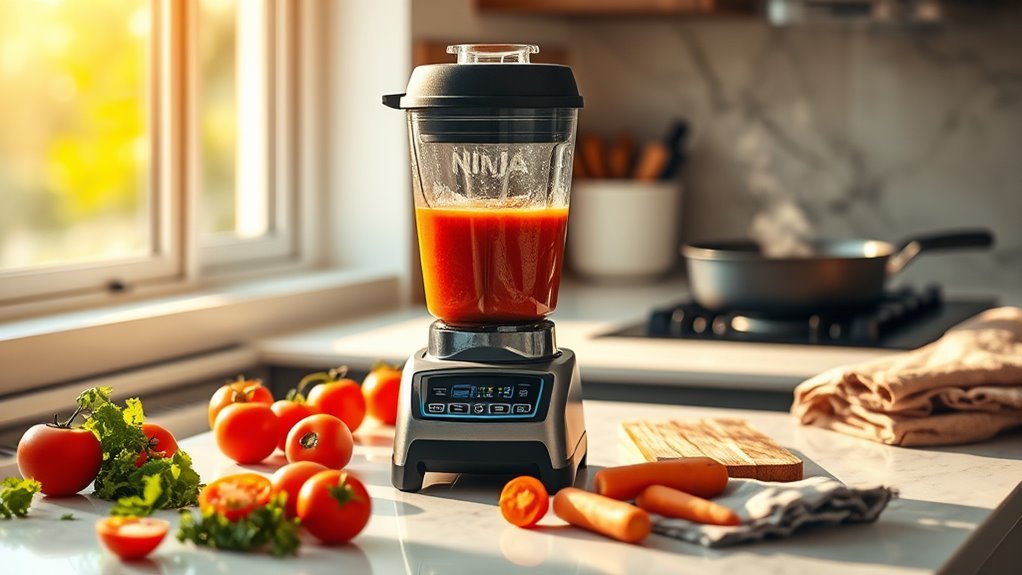
As much as we love what the Ninja Hot & Cold Blender can do, it’s not going to replace your stovetop entirely — not even close.
You can’t sear a steak or brown onions in it, and honestly, that high, direct heat for caramelization just isn’t something a blender can replicate.
And if you’re thinking about boiling a big pot of pasta or scaling up a recipe for a crowd, well, the capacity here probably won’t cut it.
No Searing or Browning
Searing is one of those cooking tasks that the Ninja Hot & Cold Blender simply can’t pull off, and honestly, that’s not a knock against it — it’s just not what it’s built for. We’re talking about high-heat surface contact, the kind that triggers the Maillard reaction. The blender doesn’t do that.
Here’s what it actually can’t replicate:
- Stovetop-level browning temperatures
- Caramelization from skillet or grill contact
- A dedicated searing or browning mode
- Surface crust development on proteins or vegetables
Any non relevant discussion about using it like a pan, or off topic ideas around replacing your skillet, probably miss the point entirely. It’s a blending and beverage appliance — well, a really good one — just not a stovetop replacement.
Limited Batch Cooking Capacity
Batch cooking’s another area where the Ninja Hot & Cold Blender hits a wall — and it’s not a small one. We’re talking about a machine built around brewing, not bulk meal prep. Its limited capacity means we can’t realistically use it to simmer a big pot of soup or cook grains for the week. Think of it like trying to fill a swimming pool with a garden hose — technically possible, maybe, but completely impractical. As a stovetop replacement for batch cooking? It just doesn’t hold up. It wasn’t designed for that, and honestly, I think pretending otherwise sets unrealistic expectations. If large-scale cooking is part of your routine, you’ll still need your stovetop — no way around it.
Cannot Replace Boiling Pasta
Here’s a task the Ninja Hot & Cold Blender simply can’t touch — boiling pasta. And honestly, that’s not even a non relevant topic worth debating. It’s just the reality. Pasta needs a steady, rolling boil — something this blender can’t produce.
- It can’t maintain high boiling temperatures for starches
- Water chemistry tied to stovetop simmering doesn’t translate here
- Cooking times require heat control the blender lacks
- It’s designed for beverages, not starch-heavy cooking tasks
We know this might feel like an irrelevant discussion for some, but it matters. You know, pasta cooking is deeply tied to stovetop methods — the heat, the timing, everything. The blender simply can’t replicate that. Pasta stays a stovetop job, full stop.
Meals the Ninja Hot & Cold Blender Handles Without a Stove
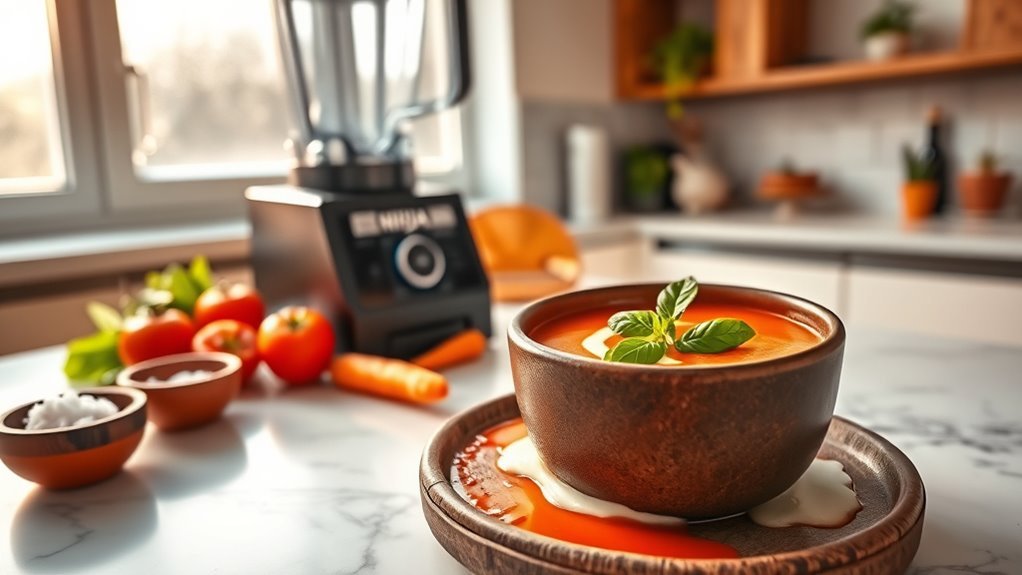
What meals can the Ninja Hot & Cold Blender actually handle without a stove? Well, honestly, this gets into irrelevant topic territory fast — because we’re not talking about a blender here. This whole off topic discussion stems from a mix-up.
The Ninja Hot & Iced XL Coffee Maker isn’t a blender, and it definitely can’t handle meals. It brews coffee, cold brew, and iced beverages. That’s it. There’s no sautéing, simmering, or cooking of any kind built into this machine. I think people sometimes assume “hot” means it can cook food — but that’s not how it works. It heats water for brewing, not for preparing meals. So, we wouldn’t expect it to replace your stovetop for anything food-related.
Cooking Scenarios That Always Require a Stove
Since we’ve established that the Ninja Hot & Iced XL Coffee Maker isn’t built for meals, it’s worth spelling out the cooking scenarios where a stove is just… non-negotiable. Its high heat limitation makes it impossible to function as a stovetop equivalent for tasks that demand serious, sustained heat. Think of it like asking a bicycle to do a car’s job — it’s just not the right tool.
Here’s where you’ll always need a stove:
- High-heat sautéing vegetables or proteins
- Rapid sauce reductions requiring rolling boils
- Searing meats for proper caramelization
- Frying anything that needs precise oil temperatures
We’re not saying the coffee maker isn’t useful — it absolutely is. But some cooking methods simply can’t be compromised.
Frequently Asked Questions
Can You Put Hot Things in the Ninja?
Yes, we can add hot soups and spicy emulsions to the Ninja, but it’s not designed to replace your stovetop—it’s built for brewing beverages, not cooking or heating foods.
Can I Make My Ninja Coffee Machine Hotter?
Can we truly push our Ninja’s heat beyond its limits? Unfortunately, we can’t manually adjust hot beverages output, but we can optimize machine heat tolerance by pre-warming cups and descaling regularly for hotter results.
What Is the 15 15 15 Rule for Coffee?
The 15 15 rule means using 15 grams of coffee, extracting 15%, and brewing around 15 minutes. We’d also recommend maintaining ideal coffee temperature between 195–205°F for balanced, flavorful results.
Can Ninja Blenders Handle Heat?
Surprise, surprise—we can’t replace our stovetops! Ninja blenders do handle hot topics like warm liquids, but safety concerns mean they’re not built for high-heat cooking. They’re blenders, not stovetops!