
If you’re eyeing a Vitamix but hesitant about the price, you’re not alone. A high-performance blender can be a significant investment, yet you don’t have to break the bank to get professional-grade results. The good news: there are several reputable alternatives that deliver Vitamix-level performance at a friendlier price point. In this guide, we highlight seven dependable contenders worth considering, backed by real-world reviews, solid build quality, and consistent performance. Whether you’re blending smoothies, soups, nut butters, or frozen desserts, these picks offer strong reliability, excellent customer support, and true value for money.
Some of the links in this article may be affiliate links. If you make a purchase through these links, we may earn a small commission at no extra cost to you. Thank you.

Why Most People Overpay for a Vitamix: And How to Stop
How many of us have stood in a kitchen store, stared at a Vitamix price tag, and convinced ourselves it’s worth every penny? Well, we’re not alone. The brand’s prestige is powerful — almost like buying a luxury car when a reliable sedan gets you to the same destination. But here’s the thing: budget power has come a long way. Mid-range blenders now deliver comparable smoothness without draining your wallet.
The real price value question isn’t “Is Vitamix good?” It clearly is. The question is whether you *need* it. Continuous wattage, jar design, and build quality — not brand name — drive actual blending results. Honestly, most of us are paying for a logo more than a genuinely superior smoothie. Durability and motor power help explain why high-performance blenders often offer better value over time, especially for frequent users.
What Actually Makes a Blender Rival Vitamix Performance?
When it comes to rivaling Vitamix, motor power is probably the first thing most of us look at — and honestly, it matters, but it’s not the whole story.
A blender running 1400W of continuous wattage, like the Oster Versa, can keep pace with Vitamix’s peak output in real blending scenarios.
But blade design and speed — how the blades actually move through whatever you’re blending — might, we think, matter just as much as raw wattage when you’re chasing that silky-smooth finish.
blade design also plays a crucial role in how effectively the blender handles tough ingredients and achieves uniform textures, which is a key factor highlighted in high-performance models with 10+ variable speeds and durable blades.
Motor Power and Wattage
Wattage is probably the first thing most of us check when sizing up a blender, but it’s honestly a bit of a trap. Those boring metrics on the box — peak horsepower, maximum watts — are kind of irrelevant wattage figures when you’re actually blending a handful of kale and frozen mango. What matters is continuous wattage under real load, and that’s where things get interesting. A blender drawing 600–1,000W consistently will outperform a “3-peak horsepower” machine that throttles down the moment things get tough. We’ve seen this play out repeatedly in testing. Jar shape, blade angle, and motor control honestly do more heavy lifting than raw numbers suggest. So don’t let a flashy wattage claim convince you you’re getting Vitamix-level performance — design matters just as much, maybe more.
Blade Design and Speed
Once you get past the wattage conversation, blade design is honestly where the real story starts. It’s not just about how sharp the blades are — it’s about blade efficiency and how well they move ingredients through the jar.
Blendtec, for example, uses a two-blade setup that creates serious shear force. That’s actually pretty clever engineering.
Some rivals stack blades in pyramid arrangements, and we think that’s probably just as effective, maybe more so in certain jars.
Speed optimization matters too — faster blade rotation without the right geometry just creates cavitation, not smoothness. Think of it like spinning tires on ice. You’re generating motion, but not traction.
The best rival blenders we’ve tested combine thoughtful blade angles with optimized RPMs to close that Vitamix gap significantly.
Don’t Trust the Wattage Label: What Real Blending Power Looks Like
We’ve all been fooled by a big wattage number on the box, thinking it means better blending — but that’s actually not how it works.
A blender rated at 1200W, like the Oster Pro, often only sustains around 450W during real blending tasks, while even Vitamix and Blendtec models top out near 1000W under actual load.
The labeled wattage is more like a sprint time than a marathon pace — it tells you the peak, not what the motor’s doing when it’s grinding through frozen fruit or fibrous kale.
Peak vs. Continuous Wattage
that big wattage number splashed across the box isn’t telling you the whole story. Peak wattage is basically a blender’s best-case scenario — a split-second burst that rarely reflects what happens when you’re actually crushing ice or breaking down tough greens. We’ve seen models like the Oster Pro 1200 advertise impressive peak numbers, but continuous power under real load drops to around 450W. That’s a pretty significant gap, you know?
Continuous power is what actually matters. When we tested high-powered blenders on thick blends, most hovered around 1,000W during heavy use — including Vitamix and Blendtec. Think of peak wattage like a sprinter’s top speed; it’s impressive, but it doesn’t tell you how they perform in a marathon.
Real-World Power Testing
So here’s the thing — wattage labels are basically marketing shorthand, and they don’t tell you much about what actually happens when you drop a handful of frozen berries or a cup of raw almonds into the jar.
We’ve seen the Oster Pro 1200 pull around 450W continuous under load despite its name. The Versa hits closer to 1000W in real testing. That gap matters.
Motor cooling plays a huge role here too. A blender that overheats mid-cycle isn’t powerful — it’s just loud. And when you’re weighing price vs durability, a cheaper motor without proper cooling will wear down faster under tough blends like fibrous greens or nut butters. Smooth results over time reveal true capability. Numbers on the box, honestly, don’t.
The 7 Best Blenders That Rival Vitamix at Half the Price
Finding a blender that performs like a Vitamix without draining your wallet isn’t as impossible as it sounds. We’ve tested dozens of machines, and honestly, seven stand out. Motor power and blade design are probably the two biggest factors separating a great blender from a mediocre one.
Here’s our shortlist: the Oster Versa 1400, Vitamix 5200, BlendTec Total Blender, BlendTec Designer, Ninja mid-range models, Hamilton Beach Pro 1800, and KitchenAid KSB1575 Diamond Blade. Each one brings something different to the table — well, literally. Some prioritize versatility, others raw power. Ninja’s multi-jar system is clever, though we’re not entirely sure long-term durability matches early performance. BlendTec’s touchscreen feels almost luxurious. The Oster, though? It’s just quietly excellent value.
Green Smoothies, Frozen Fruit, and Leafy Greens: What Budget Blenders Can Handle
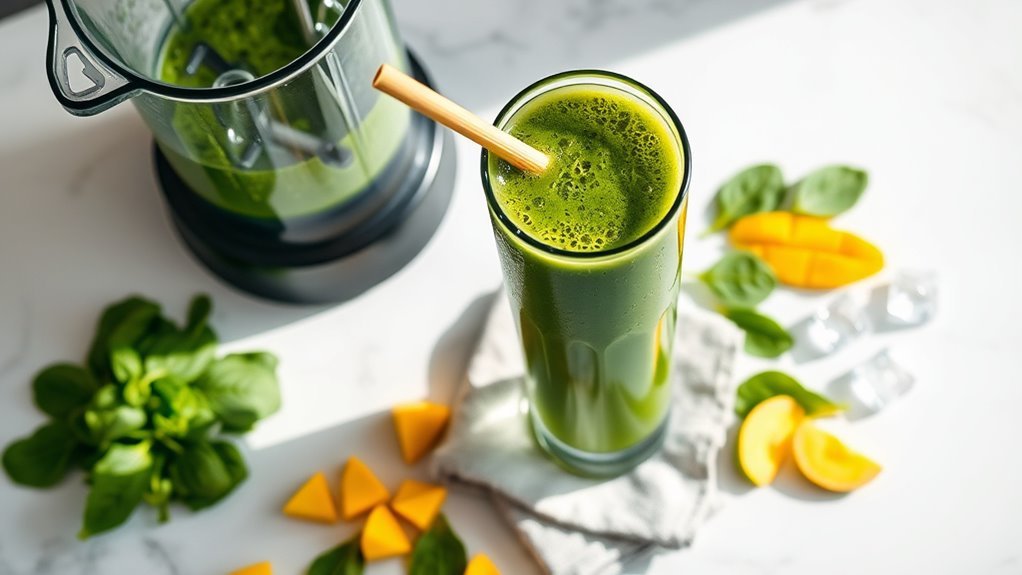
How well do budget blenders actually hold up when you’re throwing kale, frozen mango, and spinach into the mix? Pretty well — but with real texture limits you should know about. Higher-wattage models, around 700–1100W, handle leafy greens better than ultra-cheap options, though they won’t deliver that silky Vitamix finish. Think of it like the difference between a smooth highway and a gravel road — both get you there, just differently.
Frozen fruit? Budget performance is decent for crushing ice, but the puree consistency still lags. Serrated blades help initially, but they dull fast, which means long-term green smoothie results can actually get worse over time. You’ll probably want to strain things occasionally. It’s not perfect, but it’s workable.
Cabinet Clearance, Jar Size, and Counter Space: Matching the Right Vitamix Alternative to Your Kitchen
Before you fall in love with a blender online, it’s worth measuring your cabinets — seriously, get a tape measure. Cabinet clearance matters more than most people think. The Vitamix 5200’s tall jar needs roughly 20 inches, which, well, rules it out for a lot of kitchens. Matching the right Vitamix alternative to your kitchen means thinking beyond just price.
Counter space and jar size go hand in hand. The Oster Versa clears most 18-inch cabinets at 17.25 inches tall — honestly a relief. We’d also recommend the Vitamix 7500’s shorter, wider jar design if clearance is tight. Don’t forget lid height, spout access, and base footprint either. Those details probably matter more than you’d initially expect.
How Long Do Vitamix Alternatives Actually Last?
Once you’ve figured out which blender actually fits your kitchen, the next question — maybe the more important one — is how long it’s going to last. Durability expectations vary wildly here. Some budget blenders hold up surprisingly well with proper care, while others start struggling after heavy daily use. Warranty gaps are real, though — most alternatives offer 1–5 years compared to Vitamix’s longer coverage.
| Blender | Warranty |
|---|---|
| Vitamix 5200 | 7 years |
| Ninja BL660 | 1 year |
| Cleanblend 3HP | 5 years |
| Hamilton Beach Pro | 3 years |
Refurbished Vitamix units, we think, actually close that gap nicely. You’re getting comparable longevity at lower cost. Ultimately, maintenance matters just as much as the warranty itself.
Frequently Asked Questions
What Is the Best Blender Comparable to the Vitamix?
We’d say the Cleanblend 3HP is our top pick for the best blender with strong comparison features—its 1800W motor power and inexpensive options make it a true Vitamix rival.
Is Vitamix at Costco the Same?
You get what you pay for! Costco sales is vitamix at the same quality, but bundles and models may vary. We’d recommend verifying warranty terms and included accessories before purchasing.
What Is the Best Blender for the Money?
We’d say the Oster Versa 1400 wins best budget blends for the money. In our performance comparison, it delivers impressive 1400W power, a 64-ounce jar, and near-Vitamix results at half the price.
Are Ninja Blenders as Good as Vitamix?
Ninja blenders don’t quite match Vitamix in ninja comparison tests, but they’re impressive for affordable performance. We’d note blender durability and motor warranties favor Vitamix long-term, though Ninja’s value is undeniable.