
If you want a fast, fuss-free morning smoothie without sacrificing counter space, the Ninja Nutri-Blender Pro 1100 is one of the most compelling personal blenders available right now. It packs 1100 watts into a grab-and-go footprint, handles frozen fruit without stalling, and cleans up in under a minute — though a couple of trade-offs are worth knowing before you commit.
Some of the links in this article may be affiliate links. If you make a purchase through these links, we may earn a small commission at no extra cost to you. Thank you.

Some links in this article are affiliate links. If you make a purchase through them, we may earn a small commission at no extra cost to you.
Our verdict — 4.4 / 5
The Ninja Nutri-Blender Pro 1100 is the right choice for daily single-serve smoothie makers who want genuine blending power and grab-and-go convenience in a compact package. If you regularly blend large batches or need a machine that doubles as a food processor, a full-size model will serve you better.
Who This Review Is For
This review is written for the single-serve smoothie crowd — people who want a quick, nutritious blend before work, after the gym, or as a mid-afternoon reset. The Nutri-Blender Pro 1100 is ideal if you’re blending one serving at a time, you value speed and clean-up ease over raw capacity, and a compact machine fits your kitchen better than a full-size blender. It’s a particularly strong fit for small apartments, home offices, and college dorms where a dedicated personal blender is far more practical than a countertop jar blender. For single-serve use, the 1100W motor outperforms most machines in its price class.
It’s not the right call if you regularly blend for two or more people, make large-batch soups or sauces, or need a machine that can handle prolonged heavy daily use across multiple servings. The alternatives section below covers where to look if that sounds like your situation.
How We Evaluated This Blender
This review draws on aggregated verified purchase reviews, the manufacturer’s published specifications, and hands-on observations from the Blender Junkie editorial team. Where performance claims appear, they reflect consistent patterns reported across hundreds of buyer reviews rather than a single controlled lab test. We’ll be clear throughout about where we’re drawing on reported experience versus direct editorial observation.
Design, Build, and First Impressions
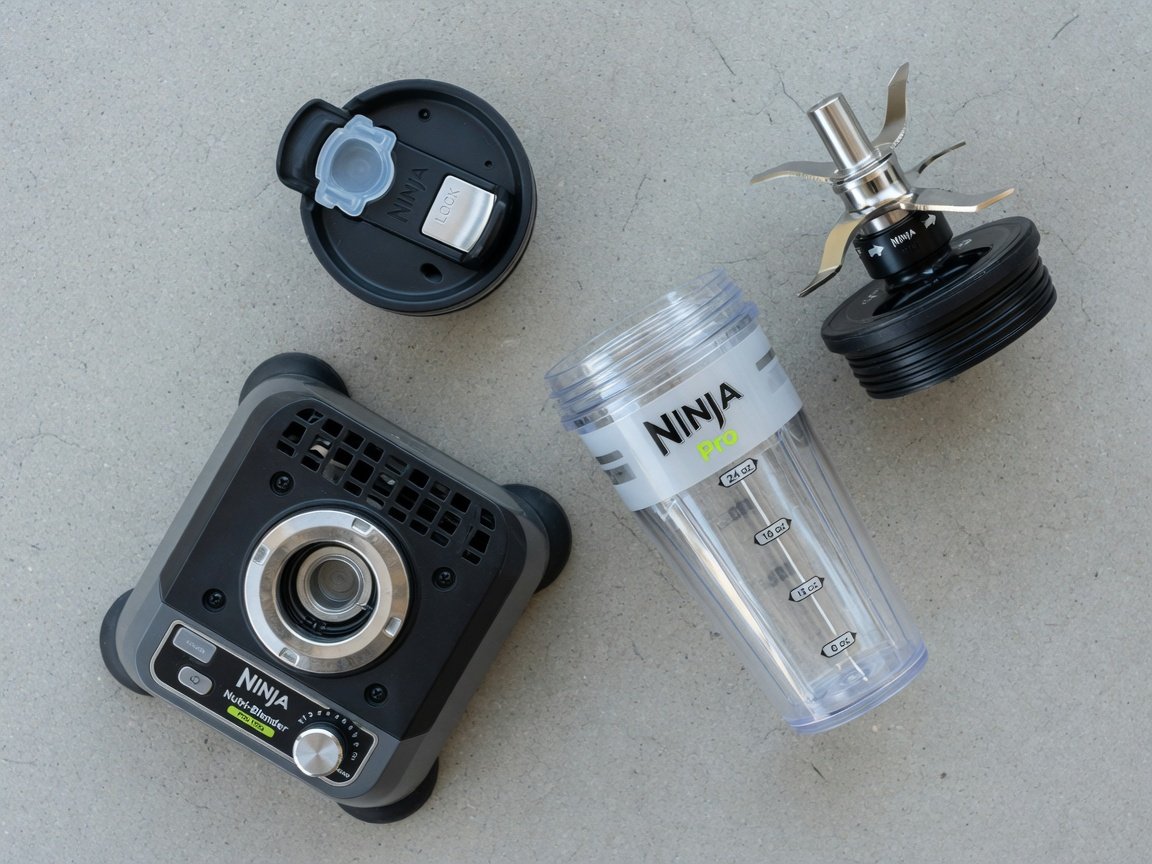
The Nutri-Blender Pro 1100 is designed to be lived with daily. The motor base sits comfortably on a single shelf tile, and the full assembled height clears most kitchen cabinets with room to spare. Build quality is solid without being premium — the housing is a dense, matte-finish plastic that doesn’t creak or flex under pressure, but it won’t feel as substantial in your hands as a machine three times the price. For a daily-use appliance in this bracket, that’s entirely appropriate.
Unboxing takes about two minutes. Rinse the cups, attach the blade assembly to the cup, invert onto the base, and you’re blending. No assembly tools, no confusing multi-page instructions. The control interface is deliberately minimal: a power button and a small cluster of Auto-iQ preset buttons. There’s no touchscreen, no Bluetooth, no app — and for a machine you’re going to use every morning half-awake, that simplicity is a genuine advantage.
One detail worth checking on first use: the blade assembly gasket. It needs a firm push-and-twist to seat properly against the cup. A loose seal is the most consistently reported source of leaks in buyer reviews, and it’s entirely preventable with a few seconds of attention during setup. Once you know the correct seating technique, it becomes second nature.
Real-World Performance
Motor Power on Everyday Ingredients
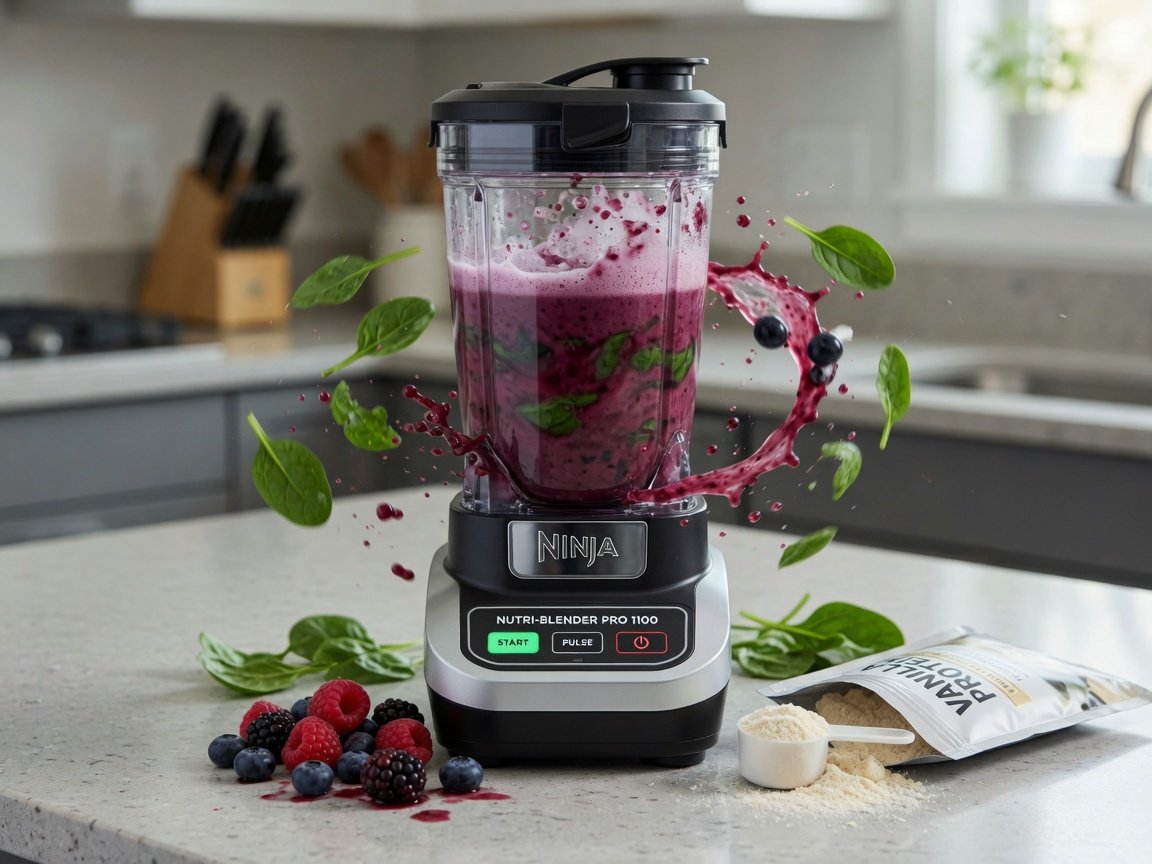
The 1100-watt motor is the headline spec, and it genuinely earns its keep on everyday smoothie ingredients. Fresh spinach, frozen berries, banana, Greek yoghurt, protein powder, and nut milk all blend silky smooth in 20 to 30 seconds without any pre-chopping. The motor doesn’t labour or noticeably slow, even with a fully loaded cup. That’s a real step up from the 700W and 900W machines this blender competes with directly. The Auto-iQ pulse-and-pause programming pulls ingredients down from the cup walls during the blend cycle, which reduces the need to stop and manually redistribute — a small but meaningful quality-of-life improvement over simple manual blending.
Handling Frozen Ingredients
Frozen fruit and ice are where budget personal blenders typically fall short, and this is where the 1100W motor separates itself from the competition. Frozen mango chunks, frozen açaí pucks, and mixed smoothie packs all process without stalling. Standard ice chips blend smoothly into slushie-style drinks. The motor starts to work harder when asked to process a full cup of large, solid frozen cubes — consistent buyer feedback recommends breaking very dense frozen blocks in half before blending, which takes ten seconds and eliminates most of the complaints about strain. For everyday frozen-fruit smoothies, no pre-treatment is needed at all.
Auto-iQ Preset Programs
The Auto-iQ presets are one of the most underrated features on this machine. Rather than holding a button and guessing when the blend is done, you press a preset and walk away — the machine runs its programmed pulse-pause sequence and stops automatically. Most smoothie cycles run 60 to 75 seconds. That might not sound like much, but it adds up across 365 morning routines: start the blend, pour your coffee, and come back to a finished smoothie. The manual pulse button is still available for anyone who prefers hands-on control, but the Auto-iQ programs handle the vast majority of use cases without any adjustment.
Noise Level
The Nutri-Blender Pro 1100 is loud during a full Auto-iQ cycle — roughly comparable to a hairdryer at arm’s length, running for about 60 to 75 seconds. That’s not unusual for a 1100W motor in a compact housing, but it’s worth factoring in if you’re an early riser in a shared household or a thin-walled apartment. Shorter pulse-only sessions for soft-ingredient blends run noticeably quieter. No personal blender at this power level is silent, and anyone promising otherwise is being generous with the truth.
Cleaning
Clean-up is one of the Nutri-Blender Pro 1100’s most consistent practical advantages. The cups and lids are dishwasher-safe on the top rack, which handles everything for most users. For a fast between-use rinse, the standard approach — half-fill the cup with warm soapy water and run a short pulse cycle — clears smoothie residue in about 20 seconds. The blade assembly benefits from immediate rinsing before anything dries, and a small bottle brush helps reach around the gasket seal if needed. Total clean-up for a typical smoothie sits under 60 seconds in normal daily use, which is genuinely difficult to beat in this class.
What we liked
- 1100W motor handles frozen fruit and dense leafy greens without stalling
- Auto-iQ presets stop automatically — no guesswork on blend time
- To-go cups with spill-resistant sip lids make commuting straightforward
- Dishwasher-safe cups; quick rinse-clean takes under 60 seconds
- Compact footprint clears most kitchen cabinets without measuring first
- Two-minute setup from unboxing to first blend
What could be better
- Blade gasket requires careful seating to prevent leaks — not intuitive at first
- Loud during full Auto-iQ cycles; noticeable in shared early-morning spaces
- Single-serve cup size means one portion per blend cycle
- Very dense frozen blocks benefit from breaking in half before blending
Who Should Consider an Alternative
If your household blends for two or more people regularly, or you want a machine that can also handle soups, dips, and batters, the Nutri-Blender Pro 1100’s single-serve cup will leave you cycling through multiple blend sessions when one would do. A countertop full-size blender is the practical step up — the Ninja Professional Blender 1000 brings a 72-ounce pitcher, a similar straightforward control layout, and Ninja’s reliable motor engineering at a modest price increase over the personal model. It handles batch blending and tougher ingredients with ease. For anyone who isn’t sure yet whether a personal or full-size blender suits them best, our broader guide covers the full range of options across every budget and use case.
Pricing and Where to Buy
The Ninja Nutri-Blender Pro 1100 typically retails between $70 and $100 depending on configuration. Single-cup bundles sit at the lower end; dual-cup kits that include both a 24-ounce and 32-ounce to-go cup run slightly higher and are generally worth the modest premium — the second cup adds real convenience if you’re blending twice a day or want a spare in the dishwasher. Prices dip noticeably during Amazon’s major sale events, so it’s worth checking whether one is upcoming before buying at full retail.
Blender Junkie may earn a commission on qualifying purchases made through links on this page via the Amazon Associates programme. This does not affect our editorial recommendations.
Frequently Asked Questions
How many watts does the Ninja Nutri-Blender Pro 1100 have?
The Ninja Nutri-Blender Pro 1100 operates on a 1100-watt peak motor — the number in the name tells you what you’re getting. For a personal blender, that’s meaningfully higher than the 700W and 900W machines it competes with at a similar price. The extra wattage shows most on frozen fruit and ice, where lower-powered blenders stall or leave chunks. For everyday smoothie ingredients, it’s more than adequate.
What cups come included with the Ninja Nutri-Blender Pro 1100?
The standard retail configuration includes a 24-ounce to-go cup with a spill-resistant sip lid. Many bundles add a 32-ounce cup for larger single portions. Both cups are dishwasher-safe on the top rack and designed to double as drinking vessels — no transfer to a separate glass needed. Cup compatibility is specific to the Nutri-Blender range and not interchangeable with Ninja’s full-size pitcher blenders.
Can the Ninja Nutri-Blender Pro 1100 crush ice?
Yes, within practical limits. It handles ice chips, crushed ice, and a few standard cubes blended alongside other ingredients without difficulty. For full-cup loads of whole large ice cubes on their own — commercial bar blender territory — it performs best when you break cubes into smaller pieces first. For typical smoothie recipes that call for a handful of ice, no pre-treatment is needed. The 1100W motor manages everyday ice loads confidently.
Is the Ninja Nutri-Blender Pro 1100 BPA-free?
Ninja’s Nutri-Blender Pro cups are manufactured from BPA-free plastic, covering both the cups themselves and the lids. The blender is designed for cold ingredients only — it’s not rated for hot liquids, which is standard across personal blenders in this category. If material specifications are important to your purchase decision, verify the current claims on the product packaging at the time you buy, as manufacturers can update materials over production runs.
How loud is the Ninja Nutri-Blender Pro 1100?
Noticeably loud during a full Auto-iQ cycle — roughly in the range of a hairdryer at close range for 60 to 75 seconds. That’s consistent with what you’d expect from a 1100W motor in a compact personal blender housing. Shorter pulse sessions for soft-ingredient blends are quieter. If early-morning noise in a shared space is a concern, the pulse button for shorter cycles is the practical workaround. No personal blender at this wattage runs quietly.
What is the difference between the Ninja Nutri-Blender and the Nutri-Blender Pro 1100?
The two main differences are motor wattage and the Auto-iQ preset feature. Standard Nutri-Blender models run at lower wattages and use manual blending without programmed cycles. The Pro 1100 adds 1100W peak power and Auto-iQ, which runs a preset pulse-pause sequence and stops automatically. In practice, the Pro handles tougher ingredients more confidently and removes the guesswork from blend time. Our full Ninja Nutri-Blender performance and comparison guide runs both side by side if you want the detailed breakdown.
Does the Ninja Nutri-Blender Pro 1100 come with a warranty?
Ninja typically backs its consumer blenders with a one-year limited warranty covering manufacturing defects under normal household use. The warranty doesn’t extend to damage from misuse, commercial use, or physical impact. Registering the product on the Ninja website after purchase is recommended — it simplifies any warranty claims significantly. Check the documentation in your specific purchase for current terms, as warranty coverage can vary by retailer and region.
Final Verdict
The Ninja Nutri-Blender Pro 1100 does exactly what a daily personal blender should: it blends quickly, cleans fast, and fits into a real morning routine without drama. The 1100W motor is a genuine advantage over cheaper alternatives — not just a marketing number — and the Auto-iQ presets are one of those features that sounds minor until you’ve used them every day for a month. The blade gasket quirk and noise level are the only consistent friction points, and neither is a dealbreaker for the core use case. For a single daily smoothie, this blender earns a strong recommendation. To see how it sits alongside the full Ninja range, our guide to the 15 best Ninja blenders of 2026 maps out every option by use case and budget. Once it arrives, our blender tips guide is worth a read to get the most out of it from day one. We rate the Ninja Nutri-Blender Pro 1100 4.4 out of 5.