
Just yesterday, we were talking about how frustrating it is to make hot soup with the wrong blender. We’ve been there—watching helplessly as plastic containers warp or motors burn out mid-purée. It’s not just about power; it’s about finding that perfect combination of heat resistance, motor strength, and design that won’t leave you with a kitchen disaster. The right blender can transform your soup game from lumpy disappointment to restaurant-quality silkiness, and we’re about to show you which ones are worth your money.
Some of the links in this article may be affiliate links. If you make a purchase through these links, we may earn a small commission at no extra cost to you. Thank you.

Why Heat-Resistant Blenders Are Essential for Soup Making
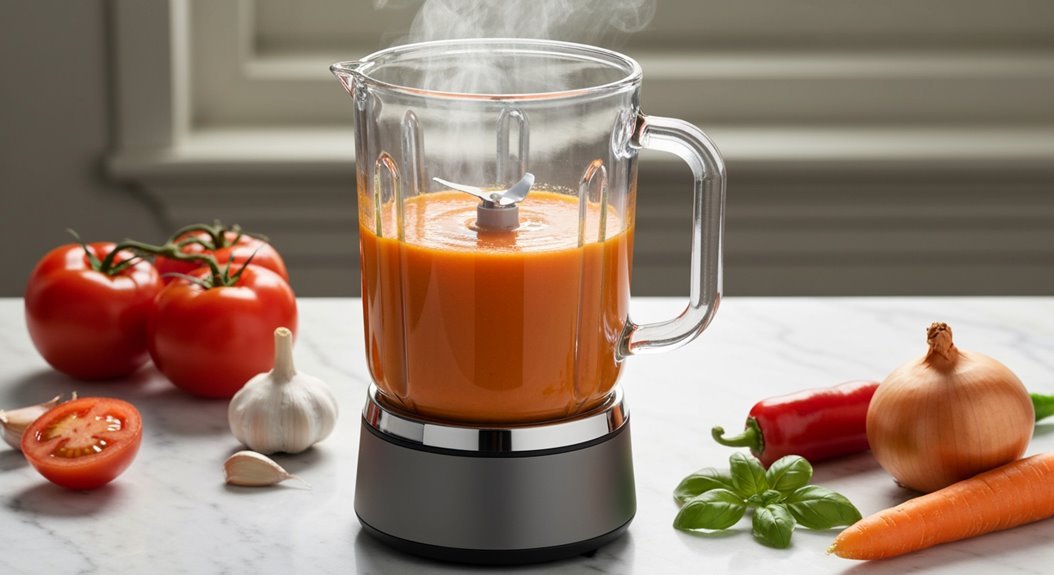
When it comes to making hot soups at home, we’ve learned the hard way that not just any blender will do the job safely. The thermal insulation in heat-resistant models is absolutely essential—trust us on this one.
We’ve seen regular blenders warp, leak, or even crack when filled with steaming soup. Yikes! A proper heat-resistant blender maintains its integrity even when those temperatures climb, which means no harmful chemicals leaching into your dinner.
What we really value are the safety features like vented lids that release steam gradually. This prevents those mini-explosions that, well, we’ve definitely experienced before (and spent way too long cleaning soup off the ceiling!). Additionally, choosing a heat-resistant blender with a powerful motor and precise temperature controls can further enhance safety and performance when making hot soups.
Top Blenders With Dedicated Hot Soup Programs
We’re thrilled to showcase today’s best blenders with self-heating technology that’ll transform your soup-making experience.
The latest models feature intelligent digital temperature controls that let you precisely adjust warmth levels, ensuring your soups reach that perfect consistency and temperature.
Most impressively, these kitchen powerhouses come with specialized blend-warm preset modes that handle the entire process—from chopping raw vegetables to delivering piping hot, velvety soup—all at the push of a button.
Additionally, their powerful motors enable them to blend tough ingredients effortlessly, making soup preparation faster and more efficient.
Self-Heating Blending Solutions
As technology continues to advance in the kitchen appliance world, self-heating blenders have revolutionized how we prepare hot soups at home. These ingenious machines eliminate the need for stovetop cooking, reaching temperatures between 160°F and 212°F while handling everything from ice crushing to creating perfect smoothie textures.
We’ve found that these high-tech blenders typically complete the entire soup-making process in just 5-6 minutes. The best models feature preset functions that automatically control blending cycles and monitor temperature throughout.
What’s impressive is how these appliances maintain durability despite the high heat they generate. For busy home cooks or commercial kitchens, there’s really nothing better for turning raw vegetables into piping hot, creamy soup with minimal effort.
You just add ingredients, press a button, and wait for dinner!
Digital Temperature Controls
The latest generation of blenders with dedicated hot soup programs has completely transformed kitchen efficiency through their advanced digital temperature controls.
We’ve found that these models don’t just blend—they actually cook your ingredients to perfection with remarkable temperature calibration accuracy.
You can precisely set temperatures up to 212°F, which means you’re fundamentally getting a cooking appliance and blender in one!
What we really appreciate are the built-in safety sensors that prevent overheating while maintaining consistent results.
Most high-end models feature preset programs that handle the entire soup-making process automatically—from chopping to simmering.
It’s like having a sous chef that specializes in soups!
The digital interfaces are typically intuitive too, allowing you to select your preferred texture from chunky to velvety smooth.
Blend-Warm Preset Modes
Taking those digital temperature controls to the next level, modern soup-making blenders now offer dedicated Blend-Warm preset modes that truly revolutionize how we prepare hot soups at home.
We’ve found that models like the Breville Super Q and select Vitamix units automatically cycle between blending and heating to temperatures around 165°F, delivering perfectly hot soup right in the pitcher.
What’s impressive is how these systems eliminate separate cooking steps entirely. You’ll notice they’re actually quieter during the heating phase than when crushing ice, which is a welcome relief for your ears!
The noise levels drop notably as the blender shifts from high-speed pureeing to gentle warming.
It’s like having a mini-stove built right into your blender—probably one of the most convenient kitchen innovations we’ve seen in years.
High-Powered Motors vs. Heat Generation Capabilities
We’ve found that a blender’s ability to create hot soup isn’t just about raw power—it’s about how efficiently the motor converts energy to heat through friction cooking technology.
When shopping for soup-making blenders, you’ll want to check both wattage and whether the ventilation system can handle extended high-speed operation without overheating.
The best models strike a perfect balance, generating enough heat to properly cook ingredients while maintaining mechanical integrity, which is why some 1,800W blenders actually outperform certain 2,000W models for soup preparation.
Power-Heat Balancing Act
When designing blenders for hot soup making, manufacturers must carefully orchestrate the delicate dance between motor power and heat generation capabilities. Finding that sweet spot where a blender generates enough friction-based heat without compromising motor safety is truly an engineering feat.
We’ve noticed that the best soup blenders use sophisticated heat dissipation systems to protect their high-powered motors during extended blending sessions.
- That satisfying moment when steam rises from perfectly smooth, hot soup you’ve just blended
- The peace of mind knowing your blender won’t overheat mid-recipe
- The confidence to walk away while your machine transforms raw ingredients into dinner
- The pride in serving restaurant-quality soup made entirely in one appliance
Honestly, it’s this balance of power and heat management that separates good blenders from truly great ones.
Friction Cooking Technology
The magic of friction cooking technology lies at the heart of modern soup-making blenders, transforming simple ingredients into piping hot meals without a stovetop in sight.
We’ve found that motors exceeding 1,500 watts generate substantial friction heat during blending—it’s actually quite remarkable how efficiently they convert motion into warmth.
When shopping for a soup blender, motor power is definitely your primary consideration. The higher the wattage, the more heat produced, though blade sharpness matters too.
Many premium models now feature preset programs that perfectly balance blending speed and duration for *superior* heating.
Just be careful—these powerful machines can sometimes get a bit too enthusiastic with the heat generation!
You might notice delicate ingredients becoming, well, not so delicate if blended too long in these high-powered friction cookers.
Ventilation System Efficiency
Although powerful motors are essential for friction cooking in soup blenders, they’re only as good as their ventilation systems. Heat dispersion becomes vital when you’re blending hot soups for extended periods.
Well-designed ventilation prevents the motor from overheating, which could otherwise lead to unexpected shutdowns right in the middle of your soup preparation—talk about frustrating!
The best ventilation designs we’ve seen incorporate:
- Strategically placed vents that channel heat away from critical components
- Built-in cooling fans that activate during high-intensity blending sessions
- Heat-resistant housing materials that won’t warp under thermal stress
- Airflow channels engineered to maintain ideal operating temperatures
We can’t stress enough how significant proper heat management is. When shopping for soup blenders, always check for ventilation design details—it mightn’t seem exciting, but trust us, you’ll appreciate it when making your fifth batch of butternut squash soup!
Glass vs. Tritan Pitchers: Best Materials for Hot Liquids
Choosing between glass and Tritan pitchers might seem trivial, but it’s actually essential for your soup-making success. When considering material safety, glass is the traditional champion – it’s non-reactive, won’t absorb odors, and handles high temperatures like a pro. But let’s be honest, we’ve all had that heart-stopping moment when a glass container slips from our fingers!
That’s where durability concerns come in. Tritan plastic offers significant advantages – it’s practically indestructible compared to glass, much lighter to handle, and still reasonably heat-resistant. Many high-end blenders now feature Tritan pitchers specifically designed for hot liquids.
We generally recommend glass if you prioritize cleaning ease and heat resistance, while Tritan is our go-to when safety and weight are your top concerns.
Best Blenders for Silky-Smooth Vegetable Purées
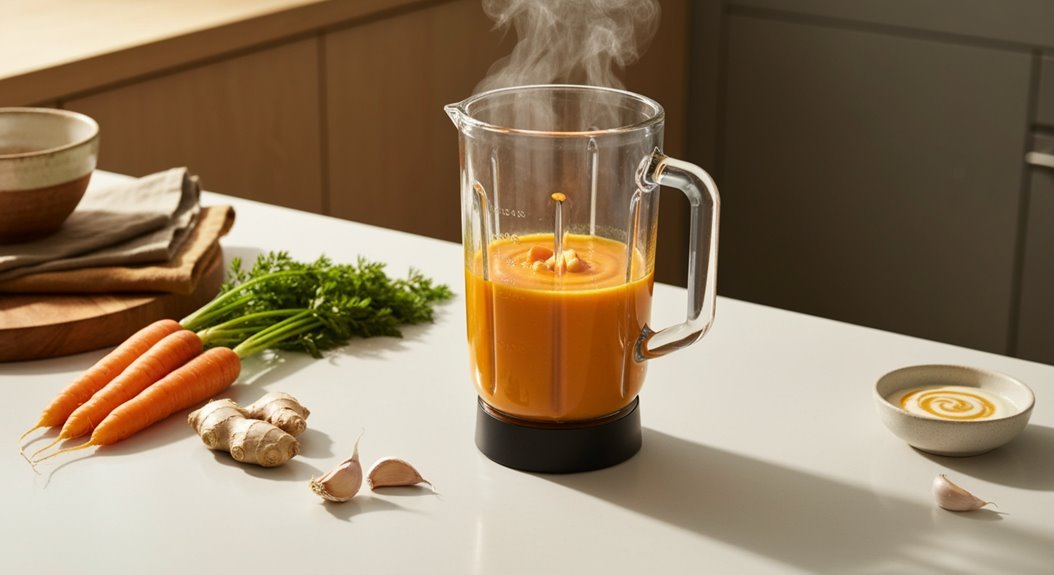
Why do some vegetable purées turn out silky-smooth while others remain frustratingly chunky? It’s all about the equipment you’re using.
We’ve found that high-powered blenders with at least 1,000 watts create that dreamy texture consistency you’re after.
For truly velvety purées, consider these game-changers:
- The Vitamix 5200 transforms even the toughest vegetables into liquid silk – it’s like watching magic happen in your kitchen
- Blendtec’s Twister jar design literally pulls ingredients toward the blades for unbelievably smooth results
- Proper ingredient preparation (like pre-cooking veggies until they’re tender) makes all the difference
- Variable speed controls let you start slow and gradually increase – kinda like easing into a hot bath
Self-Cleaning Features for Post-Soup Cleanup
After you’ve created that perfect silky-smooth vegetable purée, the last thing you want is to face a sticky, crusty blender cleanup situation. That’s where self-cleaning features come to the rescue!
We’ve found that many high-end blenders now include these time-saving functions—just add warm water, a drop of dish soap, and hit the cleaning preset. It works like magic! The same powerful motor that crushes ice for smoothie blending creates a vortex that scrubs away soup residue.
For best results, don’t wait until later—run the self-clean cycle immediately after soup-making. This quick 30-second process prevents stubborn buildup and, honestly, prolongs your blender’s life.
Trust us, once you’ve experienced the convenience of self-cleaning after making hot soups, you’ll never go back to manual scrubbing.
Budget-Friendly Options for Home Soup Enthusiasts
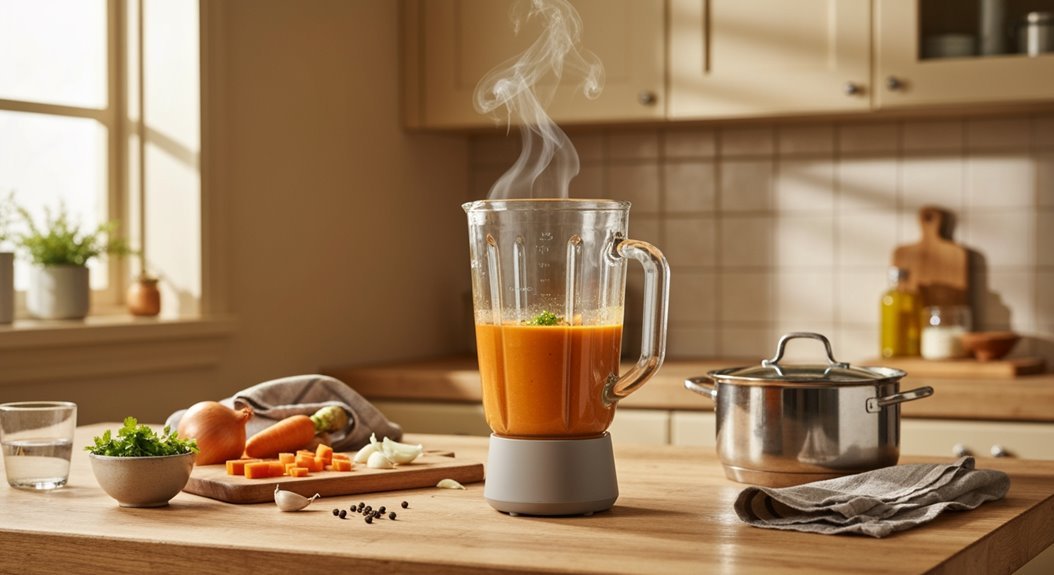
Great news for soup lovers on a budget—you don’t need to spend hundreds on fancy equipment to create delicious homemade soups! Models like the Oster Original 3-Speed Chrome deliver impressive results for around $50.
We’ve found that proper ingredient preparation makes all the difference with these affordable options.
When working with more budget-conscious blenders, you’ll want to:
- Focus on thorough manual operation, adjusting speeds as needed for that perfect texture
- Cut ingredients smaller than you might with pricier models
- Pre-cook vegetables until they’re truly soft—especially fibrous ones
- Work in smaller batches for smoother results
The glass pitchers on many of these budget models are actually great for soups since they resist those pesky tomato stains and don’t hold onto odors like some plastics.
Multi-Functional Blenders That Excel at Both Cold and Hot Recipes
A surprising number of today’s most versatile blenders can handle everything from ice-cold smoothies to piping hot soups without missing a beat. We’ve found models like the Vitamix 5200 and Breville Fresh and Furious particularly impressive for their dual capabilities.
Many of these powerhouses now come in various blender color options to match your kitchen aesthetic—from classic stainless to vibrant reds and blues.
The ergonomic handle design on newer models, like the Cuisinart Hurricane Pro, makes pouring hot soups much safer and more comfortable.
We’re especially fond of self-cleaning features that, well, actually work! Just add a drop of soap and warm water, and you’re good to go.
For home chefs who don’t want separate appliances cluttering countertops, these multi-functional wonders are definitely worth the investment.
Frequently Asked Questions
Can I Puree Hot Soup in a Blender?
Yes, you can! We’d recommend choosing a blender with good heat resistance and safety features. Let soup cool slightly, fill halfway, and guarantee your blender has a vented lid for steam release.
Which Blender Is Best for Soup?
Like warm comfort on a cold day, we recommend Vitamix or Blendtec. They’ve got the motor horsepower to heat ingredients through friction and sufficient blender capacity for family-sized soup batches.
What’s the Best Tool to Puree Soup?
We’d recommend a high-powered blender like Vitamix 5200 for pureeing soup. It’ll transform tough vegetable textures into creamy consistency seamlessly, with its 1000+ watt motor and variable speed controls.
What Is the Best Blender That Blends Everything?
Could anything possibly handle everything? We’ve found high-power countertop blenders like Vitamix or Blendtec do it all—despite their noise—tackling hot soups, frozen drinks, and tough ingredients with ease.