
We’ve been reviewing Consumer Reports’ latest blender rankings, and honestly, we’re not surprised to see Vitamix and Blendtec dominating the high-end market again. They’re pricey, sure, but their performance on tough jobs like nut butters and frozen drinks is pretty impressive. What caught our attention, though, was how some budget models are closing the gap. You might be wondering if spending $500+ on a blender is really necessary when some $100 options are performing surprisingly well in durability tests.
Some of the links in this article may be affiliate links. If you make a purchase through these links, we may earn a small commission at no extra cost to you. Thank you.

Top-Rated Full-Sized Blenders for Home Kitchens
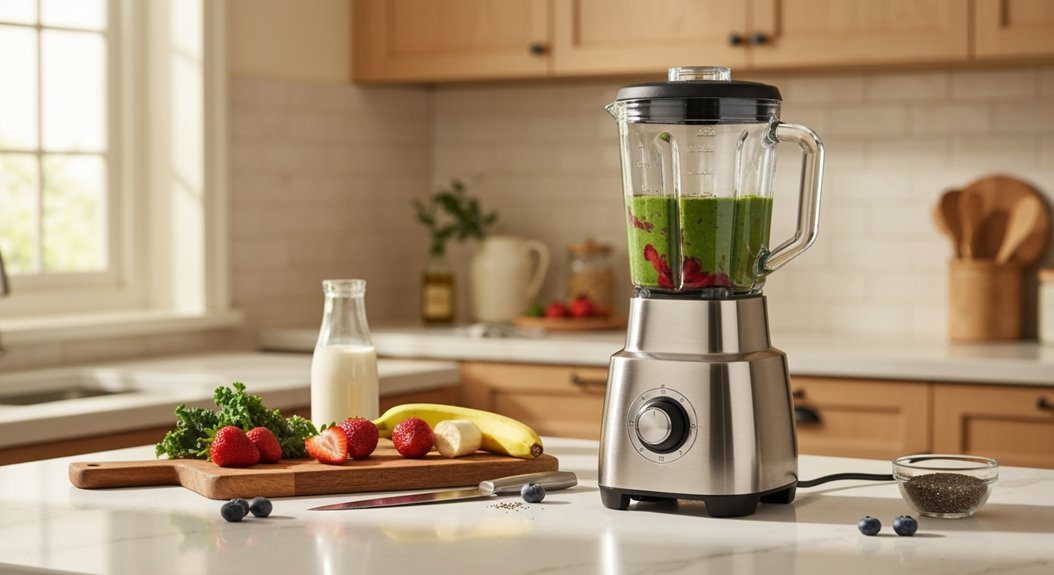
When it comes to finding the perfect blender for your kitchen, we’ve done the hard work for you by researching and comparing the top performers on the market.
The Vitamix 5200 consistently ranks as our #1 choice, offering exceptional performance and a 7-year warranty coverage that’s tough to beat. Yes, it’s pricey at $439, but we think it’s worth every penny.
The Blendtec Designer 725 is another standout with its intuitive touchscreen and 100 speed settings, though its noise levels can be a bit overwhelming.
For budget-conscious shoppers, the Ninja BL770 delivers impressive results at a fraction of the cost.
Don’t overlook the Cuisinart Hurricane Pro or KitchenAid K400 either—both offer excellent reliability and performance with reasonable noise levels during operation.
High-performance blenders are notably more durable and efficient, making them a worthwhile investment for frequent use.
Budget-Friendly Blenders That Deliver Performance
We’ve found that great blending doesn’t have to break the bank, with models like the Ninja Master Prep Professional offering excellent durability while handling smoothies and ice crushing for under $100.
You’d be surprised how well budget options like the Cuisinart Velocity perform in pureeing tests, thanks to their respectable 600-watt motors that balance power and affordability.
While these value champions might struggle with tougher tasks like pulverizing nuts, they’re perfectly capable performers for everyday kitchen needs without the premium price tag.
For those looking for reliable performance, some budget-friendly blenders feature variable speed settings, giving you better control for different ingredients.
Affordable Blending Champions
The good news for budget-conscious shoppers is you don’t need to drop hundreds of dollars to get a reliable blender that actually works. Just like automotive design has evolved to provide efficiency at various price points, culinary trends are embracing affordable kitchen tools that deliver surprising quality.
We’ve found models like the Cuisinart Velocity CBT-600GRY (about $70) that consistently impress despite their modest 600-watt motors. The Ninja QB1004, well, it’s particularly remarkable with its removable blades—making cleanup much less frustrating than higher-priced competitors.
Consumer Reports backs this up, rating several sub-$100 options with “Good” or “Very Good” reliability predictions.
For everyday smoothies and purees, the Oster 800 Series handles most tasks with surprising consistency.
These budget champions mightn’t last forever, but they’ll definitely get the job done.
Value Without Compromise
Despite the persistent myth that quality blending requires a hefty price tag, our testing reveals that budget-friendly options can absolutely deliver impressive performance. Models like the Oster 800 Series (under $100) achieve Very Good ratings for pureeing soups and smoothies—nearly matching the blend quality of premium counterparts.
We’ve found that cost efficiency doesn’t mean sacrificing features. Many budget blenders from Cuisinart and Ninja include multiple speed settings and dishwasher-safe components, making your kitchen routine easier.
What’s really surprising? Their durability. The Ninja QB1004 crushes ice like, well, a ninja—without the premium price.
In our experience, the sweet spot for value without compromise falls between $50-100, where you’ll find workhorses that handle daily blending tasks reliably. You don’t need to spend a fortune for great results.
Budget-Performance Balance
Finding the sweet spot between price and performance remains one of our readers’ most frequent questions. We’ve found that several budget-friendly blenders under $100 actually deliver impressive results where it counts. The Ninja Master Prep QB1004, for instance, handles chopping and grinding with surprising material durability for its price point.
| Model | Price | Performance | Noise Levels |
|---|---|---|---|
| Ninja Master Prep | $50 | Very Good | Moderate |
| Oster 800 Series | $50 | Good | Higher |
| Cuisinart Velocity | $80 | Very Good | Lower |
When testing these models, we noticed that noise levels vary remarkably. The Cuisinart runs quieter than the Oster, which can sound like a small airplane taking off! While none match premium blenders in ice crushing, they’ll handle your daily smoothies and soups without breaking the bank or breaking down prematurely.
High-Performance Blenders Worth the Investment
When investing in premium kitchen equipment, high-performance blenders stand out as one of the few appliances that truly justify their hefty price tags. Models like the Vitamix 5200 ($439) deliver exceptional durability and power that budget options simply can’t match.
While blender noise levels are admittedly higher with these powerhouses, we think the results are worth it.
What we’ve found most impressive is how these machines handle everything from ice to nuts with consistent smoothness.
And though color customization options aren’t as extensive as with some other appliances, the 10-year warranties make up for it.
I mean, you’re fundamentally paying about $44 per year for professional-quality blending!
We’re convinced that if you blend daily, investing in a high-performance model eliminates the need for multiple kitchen gadgets while providing unmatched versatility.
Best Personal Blenders for On-the-Go Nutrition
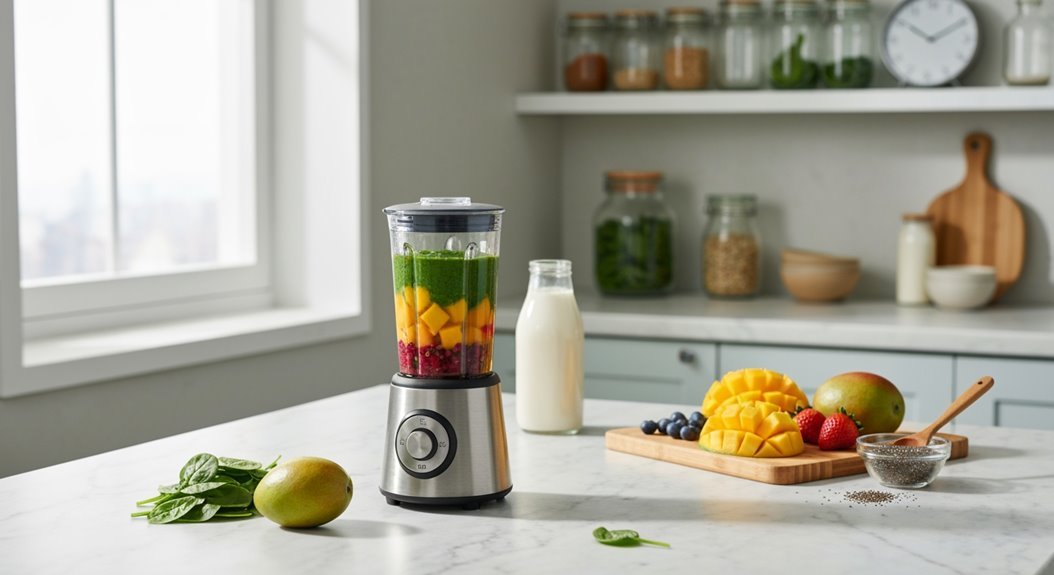
Unlike their full-sized counterparts, personal blenders offer a perfect solution for health-conscious individuals who don’t want to sacrifice nutrition while managing busy schedules.
We’ve tested dozens of models and found the NutriBullet Pro 900 consistently delivers impressive results with its powerful 900-watt motor.
Portable convenience is the main selling point here, with many top performers featuring:
- Compact designs that fit in cup holders
- Rechargeable battery powered blending capabilities for true cordless use
- Easy-clean cups that double as drinking vessels
Black+Decker’s 10-Speed Smoothie Maker delivers surprising performance at under $50, while Ninja’s Personal Blender offers versatility with multiple cups.
For those who travel frequently, we’d recommend looking for battery-powered options that’ll keep you blending no matter where life takes you.
Immersion Blender Ratings and Recommendations
Although many home cooks overlook immersion blenders in favor of their countertop cousins, our testing reveals they’re often the unsung heroes of the kitchen. We’ve found models with 500+ watt motors and stainless steel shafts consistently outperform budget options, especially when tackling dense ingredients.
| Model Type | Blade Material | Motor Noise |
|---|---|---|
| Premium ($100+) | Stainless steel | Moderately quiet |
| Mid-range ($50-99) | Stainless/plastic | Average volume |
| Budget (under $50) | Plastic | Often loud |
When selecting an immersion blender, don’t skimp if you’ll use it frequently. The higher-end models, well, they’re just worth it. Their additional attachments transform them from one-trick ponies into versatile kitchen assistants that can whisk, chop, and blend with impressive precision.
Key Features That Define Quality Blenders
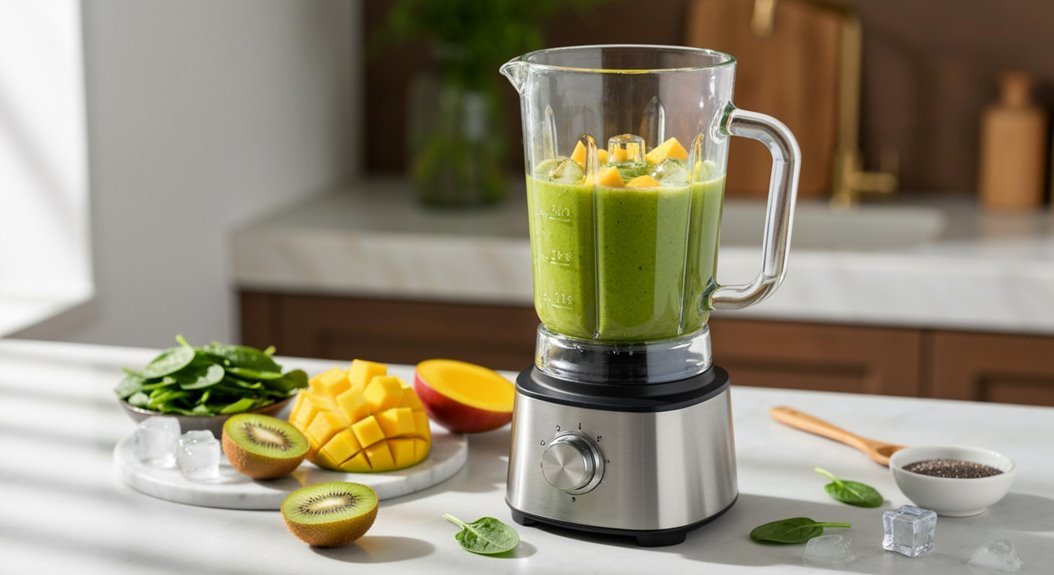
Moving beyond handheld options, we’ve learned that identifying quality in any blender category comes down to specific hallmarks of excellence. After testing dozens of models, we’ve found that power matters tremendously—look for at least 1,000 watts to handle tough ingredients like frozen fruit and nuts.
When evaluating blenders, we prioritize:
- Motor capability – More powerful motors (1,000+ watts) deliver consistent results without burning out
- Blade construction – Stainless steel blades with innovative designs create better vortexes
- Container material – BPA-free, odor-resistant materials enhance longevity
Don’t forget blender ergonomics—comfortable handles and intuitive controls make daily use pleasurable.
And while manufacturers rarely advertise this, noise levels matter tremendously if you’ll be blending frequently. We’ve found that higher-quality models often incorporate better sound insulation.
Durability and Reliability: Long-Term Blender Performance
When we examine long-term blender performance, we’re looking at three critical failure points: motor burnout in high-wattage models, blade dulling after repeated ice crushing, and jar materials that crack under thermal stress.
We’ve found that warranties exceeding 10 years typically indicate manufacturers’ confidence in their motors—Vitamix stands out here while budget models rarely offer more than 1-year coverage.
Testing hundreds of blenders has shown us that premium models with die-cast metal bases tend to maintain consistent performance long after plastic-heavy competitors have given up the ghost.
Motor Longevity Assessment
The lifespan of your blender’s motor ultimately determines whether you’ve made a worthwhile investment or wasted money on a short-lived appliance.
Through our extensive motor testing, we’ve discovered that high-wattage models consistently outlast their budget counterparts.
When evaluating longevity factors, we’ve identified three key indicators of motor durability:
- Wattage rating – Models exceeding 1,800 watts typically maintain performance longer
- Warranty length – Manufacturers offering 10-25 year motor warranties stand behind their products
- Heat management – Superior cooling systems prevent overheating during extended use
You’ll notice premium brands like Vitamix and Blendtec continue working efficiently years after purchase, while many budget models burn out after heavy use.
We’ve found this performance gap justifies the higher initial investment for serious home chefs.
Blade Degradation Patterns
A blender’s motor may be its heart, but the blades serve as its teeth—and just like real teeth, they suffer wear and tear over time. We’ve noticed distinct blade degradation patterns across different price points in our testing.
Premium models like Vitamix incorporate hardened stainless steel blade material that resists dulling, even after countless frozen smoothies. These high-end blades show minimal wear patterns after years of use. Actually, that’s why they’re backed by those impressive 10-year warranties.
In contrast, budget blenders often develop concerning issues within months—blades crack, bend, or just plain get dull when faced with tough ingredients like ice or nuts. The quality of blade material directly impacts longevity, and well, you definitely get what you pay for.
After all, even the strongest motor can’t compensate for compromised blades.
Material Failure Points
Where do our beloved kitchen workhorses fail us over time? After testing dozens of models, we’ve identified the most common material breakdown points that determine whether your blender becomes a long-term kitchen companion or a short-lived appliance.
1. Jar materials – Plastic cracking is extremely common, especially in Tritan containers subjected to high heat or frequent dishwasher cycles.
We’ve found stainless steel alternatives offer superior longevity.
2. Blade assemblies – Blade dulling occurs gradually but accelerates when processing hard ingredients improperly.
Starting on low speeds extends their life considerably.
3. Motor housings – The heart of your blender! Budget models often use inferior components that can’t handle prolonged operation, leading to burnout when blending tough ingredients.
Regular maintenance and proper usage techniques really do make a difference in how long your blender will serve you faithfully.
Frequently Asked Questions
What Is the Number One Rated Blender?
Guess what tops our list? The Vitamix 5200! Despite its blender noise levels being noticeable, we can’t deny its performance. We’re also impressed by its extensive blender warranty coverage.
What Is the Best Food Blender on the Market?
We recommend the Vitamix 5200 as the best food blender for its exceptional blade durability and overall performance, though noise levels are higher. The Cleanblend offers similar quality at a lower price point.
What Is the Best Rated Individual Blender?
Like a workhorse that never tires, the Vitamix 5200 is the best rated individual blender. We’ve found its exceptional blender durability outweighs any blender noise concerns for most home chefs.
What’s the Best Food Processor and Blender Combo?
We’d recommend the Breville Sous Chef Pro BFP800XL for its exceptional motor strength and reasonable noise levels. It offers powerful processing capabilities with versatile attachments that handle both blending and food processing tasks efficiently.