
We’ve tested countless blender pitcher materials, and these seven stand out: borosilicate glass (-40°C to 200°C), Tritan copolyester (up to 212°F), tempered glass (300°F shock resistance), food-grade stainless steel (-40°C to 150°C), polycarbonate thermoplastic (-40°C to 120°C), crystal-clear PETG, and heat-stabilized polypropylene. Each offers distinct advantages in heat resistance and durability, with borosilicate glass leading for thermal shock protection. Let’s explore what makes each material uniquely suited for your blending needs.
Some of the links in this article may be affiliate links. If you make a purchase through these links, we may earn a small commission at no extra cost to you. Thank you.

Borosilicate Glass: Superior Heat Tolerance and Durability
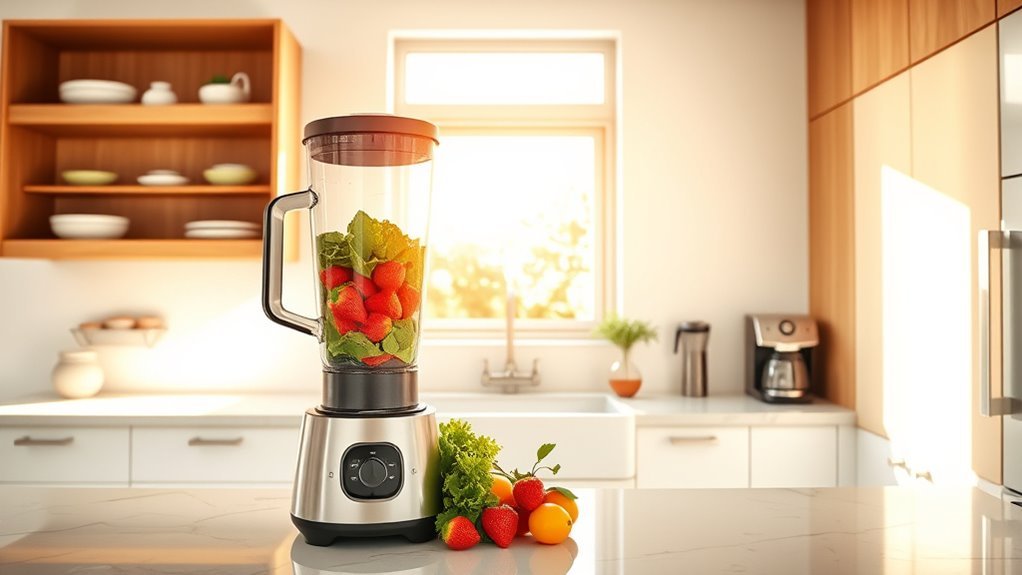
When you’re dealing with hot liquids in blenders, borosilicate glass stands head and shoulders above other materials.
We’re talking about a heat resistance range from -40°C to 200°C – that’s seriously impressive thermal shock protection. You won’t find a safer, more durable option for blending hot soups and sauces.
Let’s get technical: borosilicate glass is non-reactive, so it won’t leach chemicals into your food. For health-conscious consumers, that’s non-negotiable.
Plus, it’s dishwasher-safe and practically immune to scratches, stains, and lingering odors.
Sure, you’ll pay more upfront, but here’s the kicker – these pitchers outlast plastic ones by years. High-performance blenders can also enhance your blending experience by ensuring that ingredients are blended to a smoother texture.
Think of it as investing in your health and kitchen efficiency. No more replacing cracked containers every few months.
Tritan Copolyester: BPA-Free Performance Under Heat
If borosilicate glass isn’t your speed, Tritan copolyester‘s got your back. This BPA-free plastic champion delivers exceptional heat resistance up to 212°F without warping or leaching nasties into your smoothies.
Let’s break down why Tritan plastic dominates the blender scene:
- Withstands high-temp blending without chemical leaching
- Crystal-clear visibility to monitor your blend progress
- Impact-resistant construction prevents cracks and breaks
- Dishwasher-safe parts make cleanup a breeze
- Engineered specifically for safe food contact applications
We’re particularly impressed with Tritan’s ability to handle hot ingredients while maintaining structural integrity. Additionally, high-performance blenders often feature motor power that exceeds 1,000 watts, making them ideal for blending tough ingredients like hot soups.
While some studies question its estrogenic properties, it’s still miles ahead of traditional plastics for safety and durability.
For those seeking lightweight, heat-resistant blender pitchers, Tritan delivers professional-grade performance.
Tempered Glass: Impact and Temperature Shock Resistance
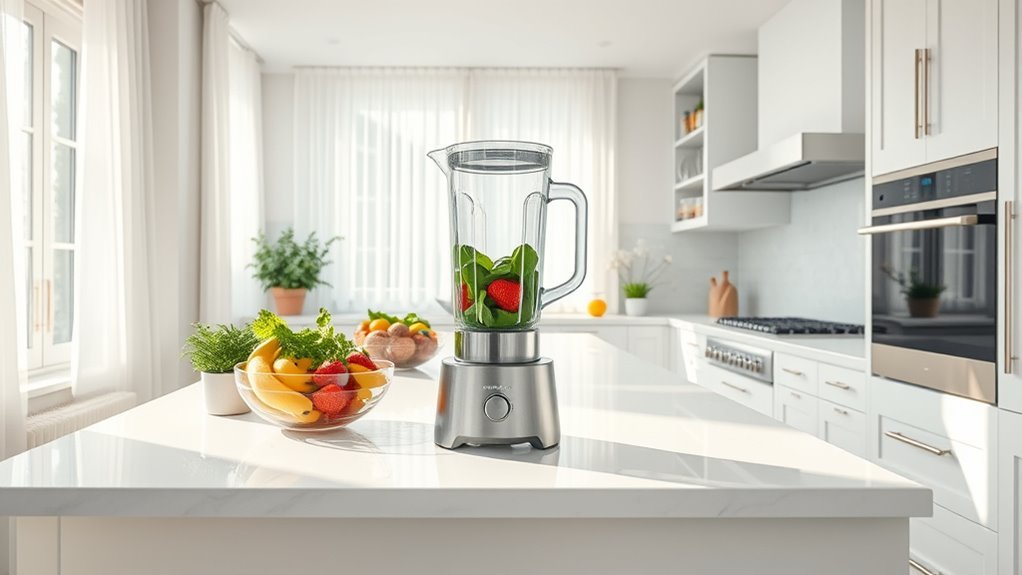
Though borosilicate glass leads the pack, tempered glass pitchers bring their own muscle to the high-heat blending game.
We’re talking serious impact resistance from a manufacturing process that combines extreme heating and rapid cooling. The result? A pitcher that laughs at temperature shock up to 300°F.
Let’s get practical: You can toss hot soups straight into your blender without the waiting game. The tempered glass won’t flinch – it’s built to handle those dramatic temperature swings.
And since it’s non-reactive, we won’t find any unwanted chemicals sneaking into our smoothies or soups. Clean-up’s a breeze too – these pitchers are dishwasher-safe and won’t scratch when you’re scrubbing out last night’s sauce experiment.
Smart engineering meets kitchen convenience.
Food-Grade Stainless Steel: Professional Heat Management
In professional kitchens where heat management matters most, food-grade stainless steel pitchers stand as the ultimate workhorses.
We’re talking about a material that laughs at extreme temperatures while keeping your blends pristine and flavor-neutral.
- Grades 304 and 316 stainless steel handle temperatures from -40°C to 150°C without flinching
- Zero flavor transfer or odor retention – your hot soup won’t taste like yesterday’s smoothie
- Non-reactive surface prevents chemical leaching, even with acidic ingredients
- Corrosion resistant construction means these pitchers outlast plastic alternatives
- Superior heat resistance guarantees no warping or degradation under high temperatures
Let’s be clear: When you’re juggling hot soups and frozen drinks in a professional kitchen, food-grade stainless steel isn’t just a choice – it’s a necessity for consistent, safe, and efficient blending operations.
Polycarbonate Thermoplastic: Commercial-Grade Heat Handling
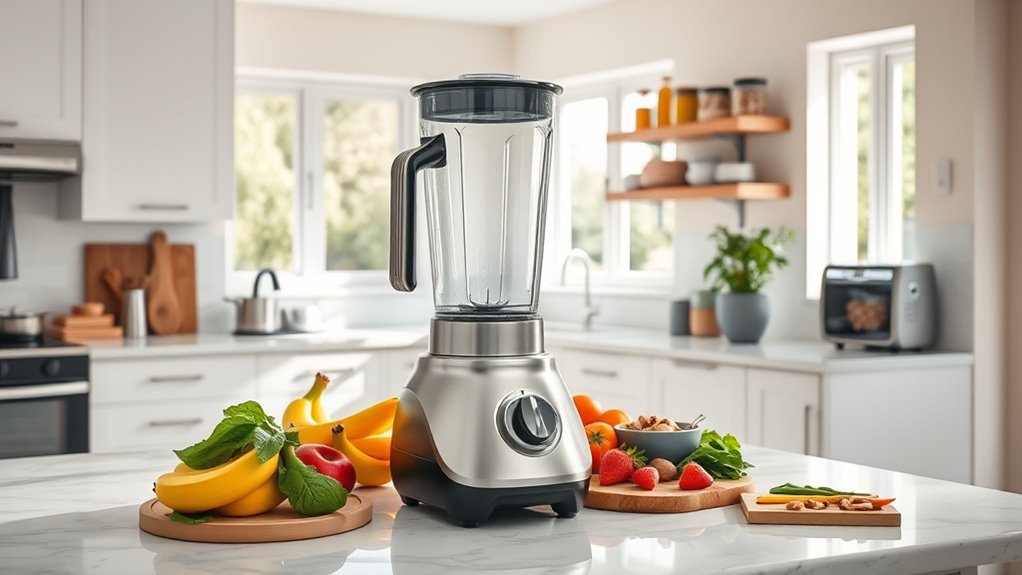
While stainless steel dominates professional kitchens, polycarbonate thermoplastic delivers serious heat-handling capabilities at a fraction of the weight.
We’re talking about a material that laughs at temperatures from -40°C to 120°C while maintaining its structural integrity – perfect for those marathon blending sessions with hot ingredients.
Let’s get real: Commercial-grade polycarbonate’s combination of impact resistance and durability makes it a powerhouse in professional settings.
It’s lightweight enough to maneuver easily, yet tough enough to handle daily abuse. Plus, its clarity lets us monitor the blending process with precision.
Just remember to verify BPA-free formulations – we’re hardcore about safety, not just performance.
For those seeking professional-grade heat resistance without the heft of metal, polycarbonate’s your answer.
Crystal-Clear PETG: Mid-Range Temperature Control
Anyone seeking crystal-clear visibility and mid-range heat performance should consider PETG. This heat-resistant material stands out for blending smoothies and moderate-temperature ingredients, with impressive durability that won’t let you down.
- Handles temperatures from -40°F to 158°F – perfect for most blending tasks
- Superior impact resistance prevents cracks and breaks during daily use
- Crystal-clear appearance lets you monitor blending progress with precision
- Excellent temperature control for both cold and warm ingredients
- Recyclable construction makes it an eco-conscious choice
We’ve found PETG to be a reliable middle-ground option that balances performance with sustainability.
Its resistance to chemical leaching means you won’t get unwanted extras in your smoothies. For everyday blending needs, PETG delivers clarity, strength, and peace of mind without breaking the bank.
Heat-Stabilized Polypropylene: Budget-Friendly Thermal Protection
When budget-conscious blending meets serious thermal protection, heat-stabilized polypropylene (HPP) delivers exceptional value.
We’re talking about a material that laughs at temperatures up to 120°C (248°F) while keeping your wallet happy. Its lightweight yet impact-resistant design means you won’t cry over dropped pitchers.
Let’s cut to the chase – HPP is BPA-free, so you can blend those piping hot soups without worrying about nasty chemicals leaching into your food.
And cleanup? It’s a breeze. Whether you’re a dishwasher devotee or prefer hand-washing, this material maintains its integrity.
While it may not have the crystal clarity of pricier options, HPP’s thermal protection and durability make it the smart choice for practical home chefs who need reliable performance without breaking the bank.
Frequently Asked Questions
What Are Vitamix Pitchers Made Of?
You get what you pay for! We’ll tell you that Vitamix pitchers are crafted from BPA-free materials, featuring high-grade stainless steel blades and an upgraded alloy base for safety and durability.
Is Vitamix Blender Heat Proof?
We can confirm Vitamix blenders are heat-proof, handling temperatures from -80℃ to 108℃. Their BPA-free pitcher material and robust design let you blend hot ingredients, though we recommend cooling them first.
Does Vitamix Make Glass Pitchers?
While Vitamix pitchers withstand extreme temperatures from -80℃ to 108℃, they don’t manufacture glass pitchers. We’ll find all their containers are made from BPA-free Tritan plastic, known for outstanding durability and safety.
Are Vitamix Pitchers Interchangeable?
Yes, we’re happy to confirm that many Vitamix pitchers are interchangeable across different models, including the 5200, 5300, and Ascent series, though you’ll want to verify specific compatibility before purchasing.