
Listen, after 20 years of turning vegetables into everything from silky soups to sneaky-smooth sauces for picky eaters, I know a thing or two about blenders. The right machine can turn a tough bunch of kale into velvet, while the wrong one leaves you fishing stringy bits out of your puree – and nobody wants that. Through countless batches of homemade baby food and countless more vegetable soups, I've learned exactly what separates the workhorses from the dust-collectors. Whether you're trying to pack more vegetables into your diet or simply want to make that butternut squash soup as smooth as the ones at your favorite restaurant, picking the right blender matters. Let's talk about what actually counts when you're choosing a blender for vegetables – from the power you really need to the design features that make cleaning less of a chore. Skip the fancy bells and whistles; we're focusing on what gets the job done.
Key Features to Look for in a Vegetable Pureeing Blender
When choosing a blender for pureeing vegetables, several essential features will determine how well the appliance performs this specific task. We'll want to focus on motor power first, as it's pivotal for breaking down tough vegetables into smooth, consistent purees. Look for models offering at least 1000 watts to handle everything from soft tomatoes to fibrous carrots.

The blade design matters greatly in how efficiently your blender processes vegetables. We recommend seeking units with multiple blade tiers and angled edges that create a vortex effect, pulling ingredients down for thorough processing. A well-designed blade system will prevent chunks from getting stuck and guarantee even blending throughout. Additionally, stainless steel blades provide durability and maintain their sharpness longer than other materials. High-performance blenders with motor power ranging from 1,000 to 1,500 watts offer exceptional versatility for comprehensive vegetable pureeing.
Top-Rated Blenders for Smooth Vegetable Purees
A detailed review of today's market reveals several standout blenders that excel at creating silky-smooth vegetable purees. We've found that models with efficient motor power, ranging from 1000 to 1500 watts, consistently deliver the smoothest results. The Vitamix 5200 leads our recommendations with its variable speed control and robust construction, making quick work of even the toughest root vegetables. High-performance blenders offer superior durability and efficiency compared to regular kitchen appliances. For those seeking convenience, we recommend the Blendtec Total Classic with its helpful blending preset options. The Ninja Professional, while more affordable, impresses us with its multi-blade technology. These blenders empower us to create everything from velvety butternut squash purees to creamy cauliflower soups. When choosing between them, consider your specific needs around capacity, counter space, and cleaning ease.
Budget-Friendly Options That Deliver Results
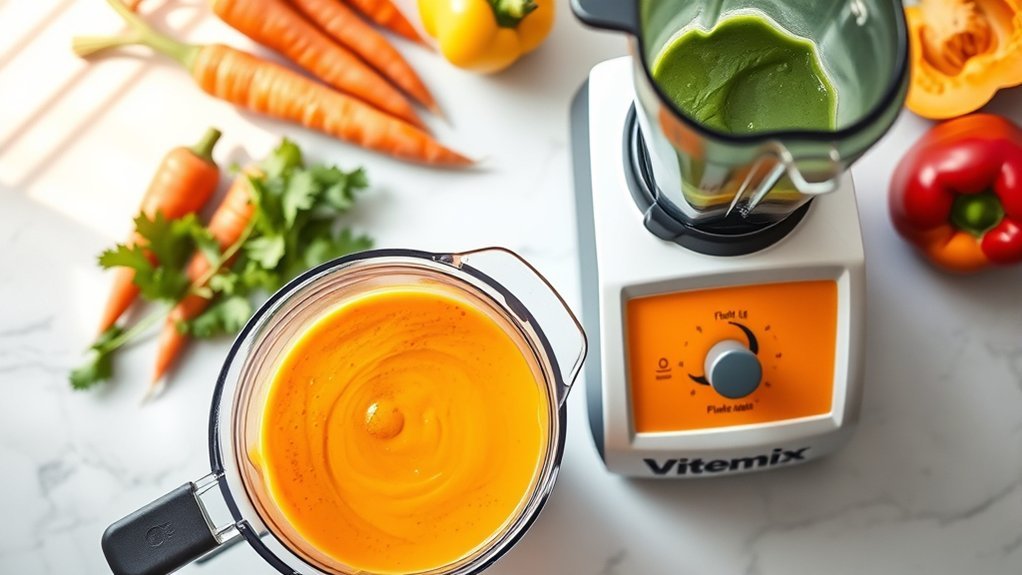
Smart shoppers don't need to break the bank for quality vegetable pureeing. We've discovered several compact blender models that offer impressive performance without the premium price tag.
When searching for budget-friendly options, we recommend focusing on energy efficient blender options that combine durability with practical features.
Many affordable blenders now include multiple speed settings, dishwasher-safe components, and BPA-free materials. We've found that brands like Ninja, Oster, and Hamilton Beach offer reliable models under $100 that can handle most pureeing tasks effectively.
While these budget options may have slightly smaller capacities or fewer preset programs than premium models, they're more than capable of creating smooth vegetable purees for everyday cooking needs.
Professional-Grade Blenders Worth the Investment
Professional-grade blenders represent a significant investment that can revolutionize your vegetable pureeing capabilities. When we're looking for consistent, restaurant-quality results, these powerhouse machines deliver with their commercial grade durability and sophisticated variable speed controls.
We've found that professional blenders offer unmatched precision, transforming even the toughest vegetables into silky-smooth purees.
Top models like the Vitamix Professional Series and Blendtec Commercial feature aircraft-grade stainless steel blades and motors that won't overheat during extended use. While they come with premium price tags, these blenders typically include lengthy warranties and can handle daily heavy-duty blending for years.
Their advanced features, such as programmable settings and thermal protection systems, make them ideal for serious home cooks and small-scale food businesses.
Power and Performance Comparison
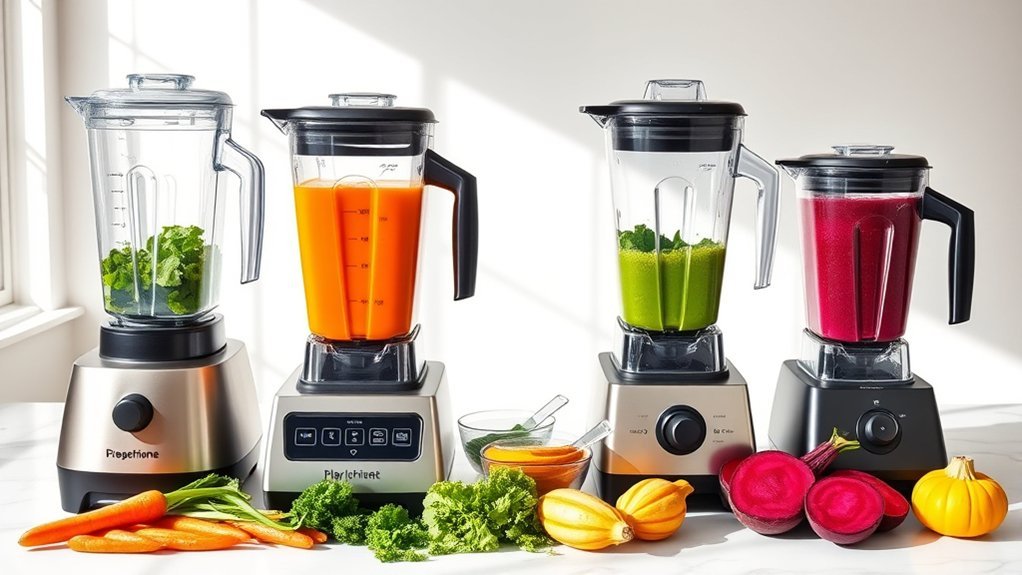
Understanding power and performance differences between blender models can help you make an informed choice for your vegetable pureeing needs. We'll examine how motor power affects blending efficiency across various price points and designs.
When comparing blenders, we've found that motor power typically ranges from 300 to 2,000 watts. Higher wattage doesn't always guarantee better performance, though – blade design and jar configuration play vital roles in pureeing vegetables effectively.
We recommend looking for models with at least 600 watts for consistent results, while professional-grade options starting at 1,200 watts offer superior blending efficiency. Consider how features like variable speed settings and pulse functions work together with the motor's capabilities to achieve the smooth, even consistency you're seeking in your vegetable purees.
Maintenance and Cleaning Tips for Your Blender
Keeping your blender clean and well-maintained is essential for both its longevity and food safety. We'll share some key strategies for proper storage techniques and routine maintenance checks that'll help you get the maximum benefit from your investment.
| Maintenance Task | Frequency | Why It Matters |
|---|---|---|
| Deep Clean | Weekly | Prevents bacteria growth |
| Blade Check | Monthly | Guarantees safe operation |
| Seal Inspection | Quarterly | Averts leaks |
Let's embrace the freedom from costly repairs by following simple cleaning steps. After each use, blend warm water with a drop of dish soap, then rinse thoroughly. Don't forget to disassemble the parts for a deeper clean weekly. Store your blender in a dry place with good airflow, and always inspect the power cord for wear during your routine maintenance checks.
Recipe Ideas and Blending Techniques
Ready to explore the creative possibilities of your blender? Let's immerse ourselves in some exciting ingredient combinations that'll transform your vegetables into smooth, nutritious delights. We recommend starting with classic pairings like carrots and ginger or spinach and apple for naturally sweet results.
For the most favorable texture experimentation, try layering your ingredients strategically. Start with liquid bases, add soft vegetables, and finish with harder produce. We've found that pre-steaming tougher vegetables like butternut squash or beetroot helps achieve silkier results. Don't be afraid to adjust the liquid-to-solid ratio as you blend, gradually adding water or stock until you reach your desired consistency. For extra creaminess, consider incorporating healthy fats like avocado or a splash of coconut milk into your purees.
Frequently Asked Questions
Can I Use a Regular Blender Instead of a Designated Vegetable Pureeing Blender?
While 78% of home cooks use regular blenders, we've found they'll work fine for pureeing if you increase blending duration and understand your blender power might require multiple rounds for silky-smooth results.
How Long Do Pureed Vegetables Last in the Refrigerator?
We recommend eating your veggie purees within 3-4 days for ideal freshness. Storage duration can vary based on ingredients, but shelf life considerations suggest avoiding keeping them longer than 5 days maximum.
Are Glass Blender Jars Better Than Plastic Ones for Pureeing Vegetables?
Like diamonds versus plastic gems, we'll always choose glass jars for their timeless appeal. They're scratch-resistant, easier to clean, and won't absorb odors, though durability concerns mean careful handling is essential.
Does Blending Vegetables Reduce Their Fiber Content?
We're happy to confirm blending doesn't reduce fiber content. The nutrient retention stays intact – our blending techniques simply break down the fibers into smaller, equally beneficial pieces.
Can I Freeze Pureed Vegetables for Later Use?
We definitely recommend freezing pureed vegetables for easy meal prep! By pureeing vegetables in advance and storing them properly, you'll have nutritious ingredients ready whenever you need them for up to 6 months.